
The complete guide
A Practical Guide to Choosing Compression Packing Cubes
A suitcase can look tidy when you close it at home and become a jumble after the first night away. A spare top ends up under a pair of trousers. Socks spread into gaps. Worn clothes get mixed with the things you have not used yet.
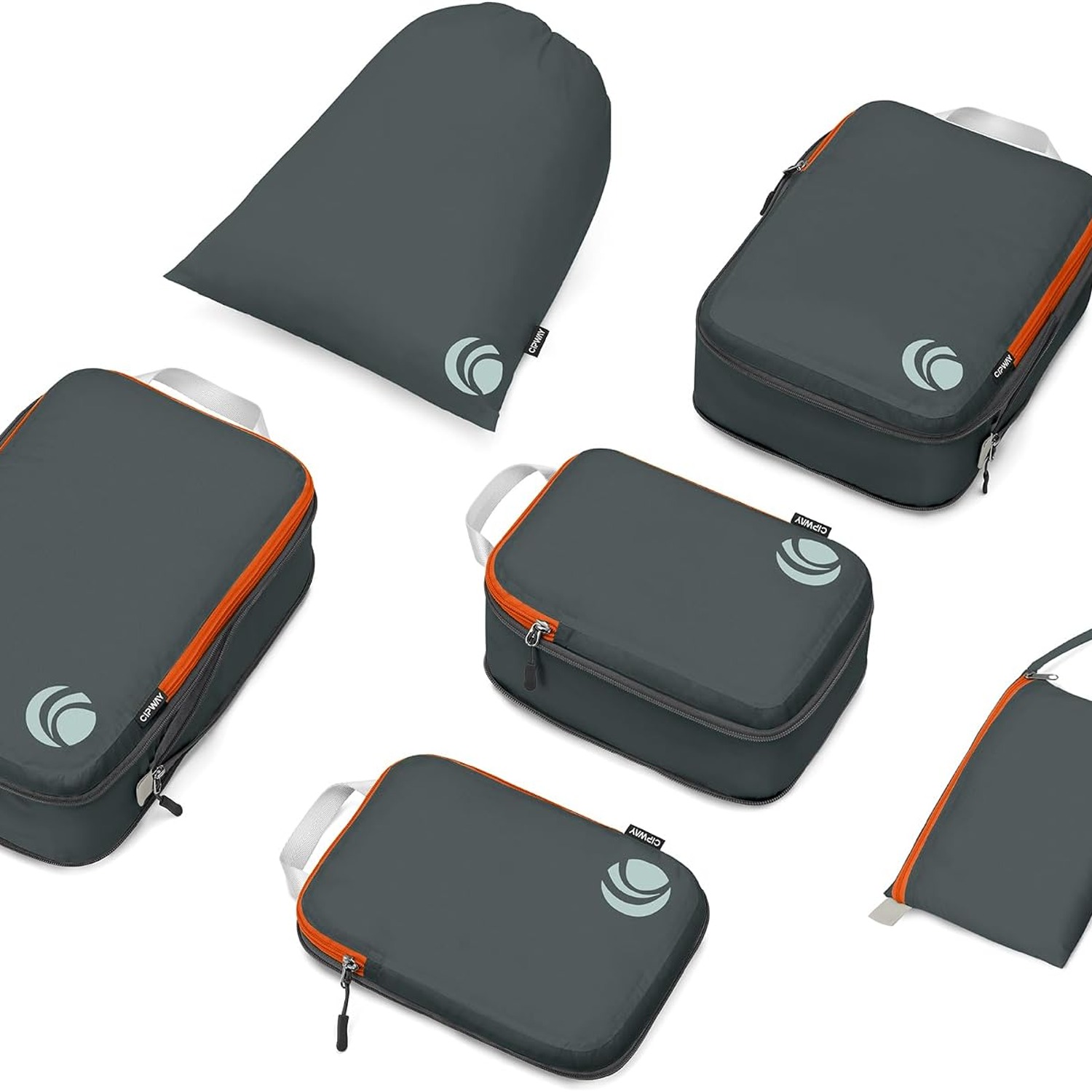
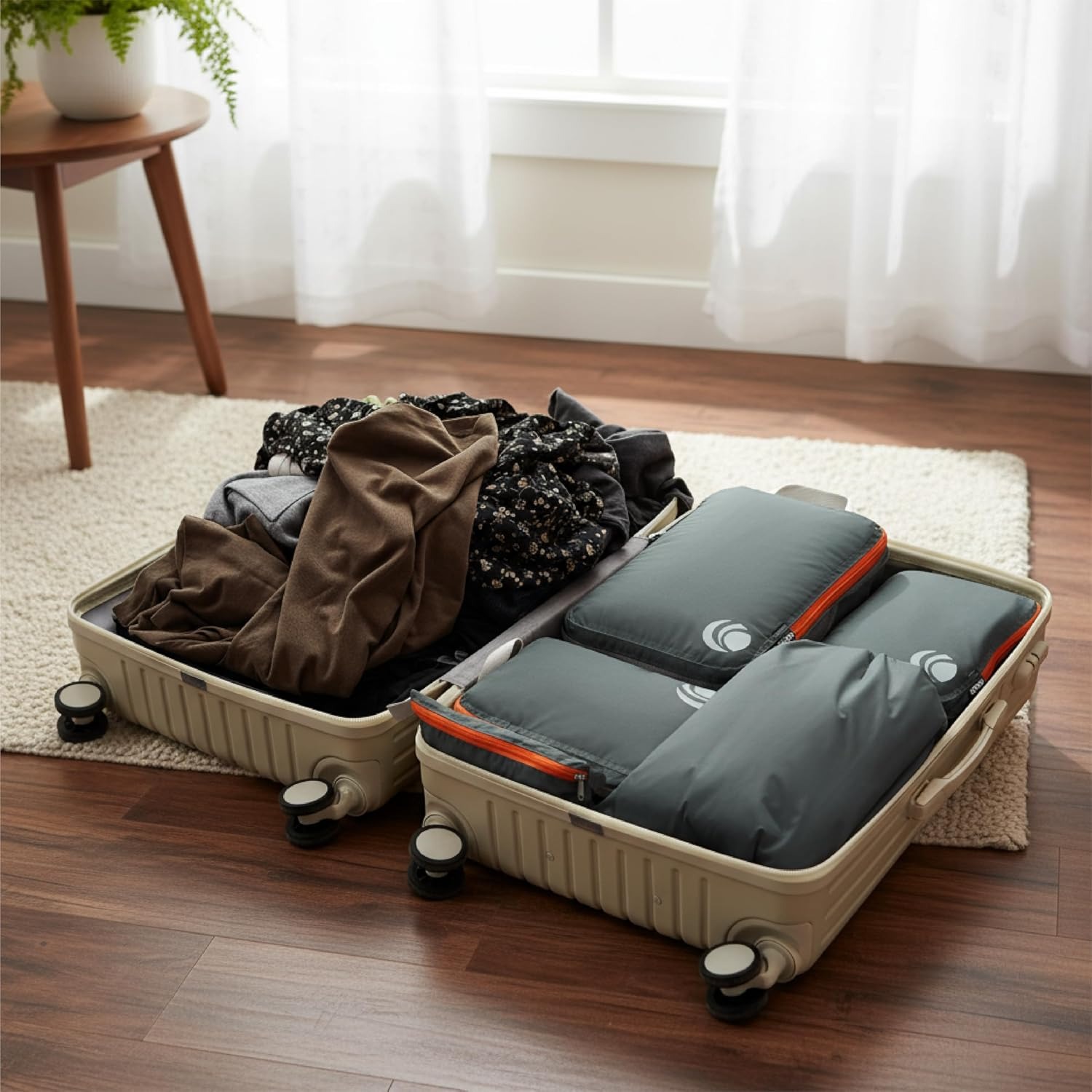
Packing cubes give those items a place to stay. Instead of sorting through the whole case, you can lift out one clothing group. This six-piece set adds a compression zip to four of its bags, helping reduce the depth of packed clothing as well as keeping it together.
The useful question is not simply whether cubes can fit more into a case. It is whether their sizes and layout suit the way you travel. Here is how to work that out.
What you get in the set
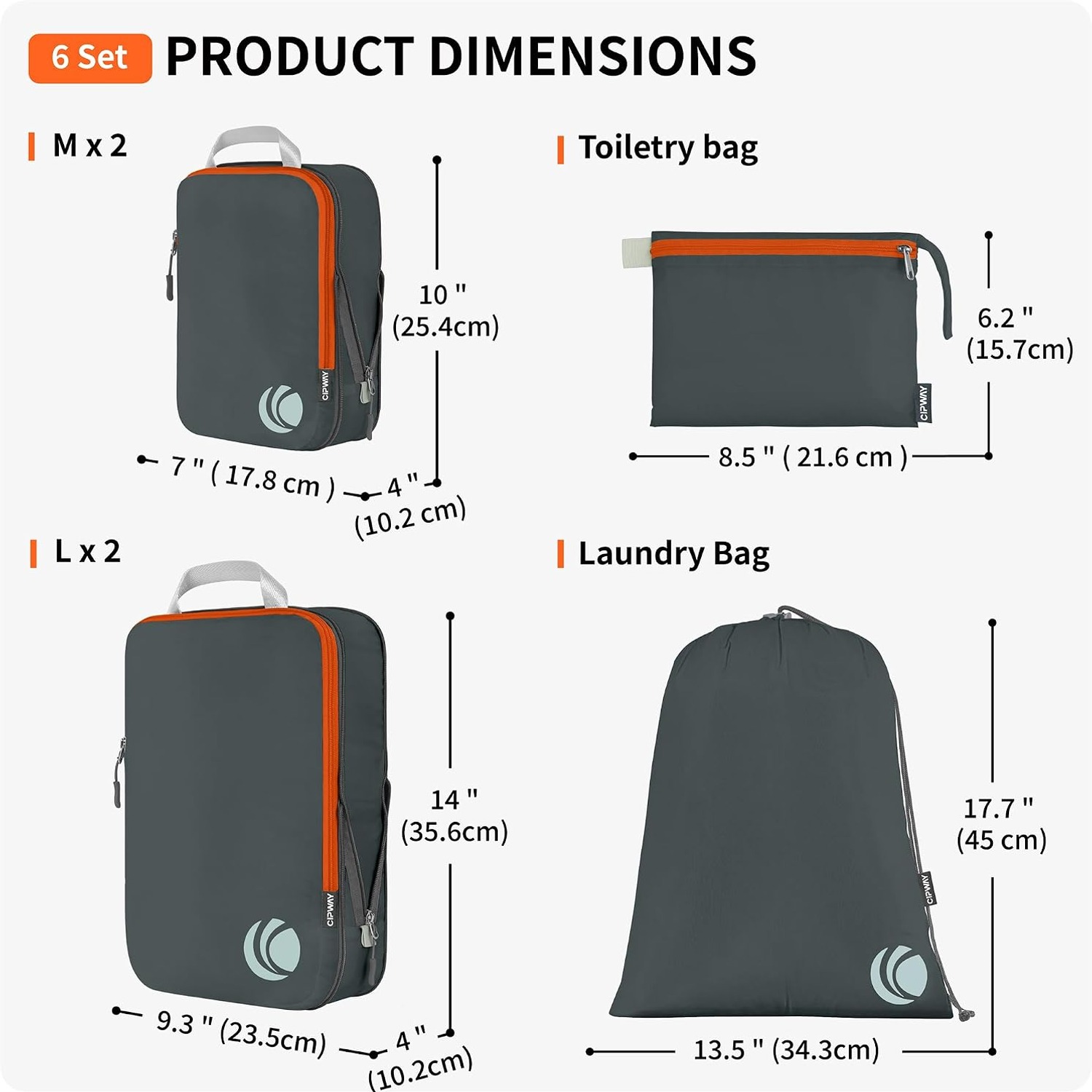
The set contains four clothing cubes in two sizes, plus a flat zipped toiletry bag and a drawstring laundry bag. You get two large cubes measuring 35.6 x 23.5 x 10.2 cm each, and two medium cubes measuring 25.4 x 17.8 x 10.2 cm each.
The toiletry bag measures 21.6 x 15.7 cm. The laundry bag measures 45 x 34.3 cm. These two pieces are not described as compression bags, so count on four compressible clothing compartments rather than six.
That mix gives you a few ways to divide a packing list. You might put tops in one large cube and other clothing in the second. The medium cubes can take smaller items, while the separate laundry bag gives worn clothes somewhere to go.
You do not need to use every piece on every trip. Choosing only what you need can be more useful than building a packing plan around filling the whole set.
How the compression zip works
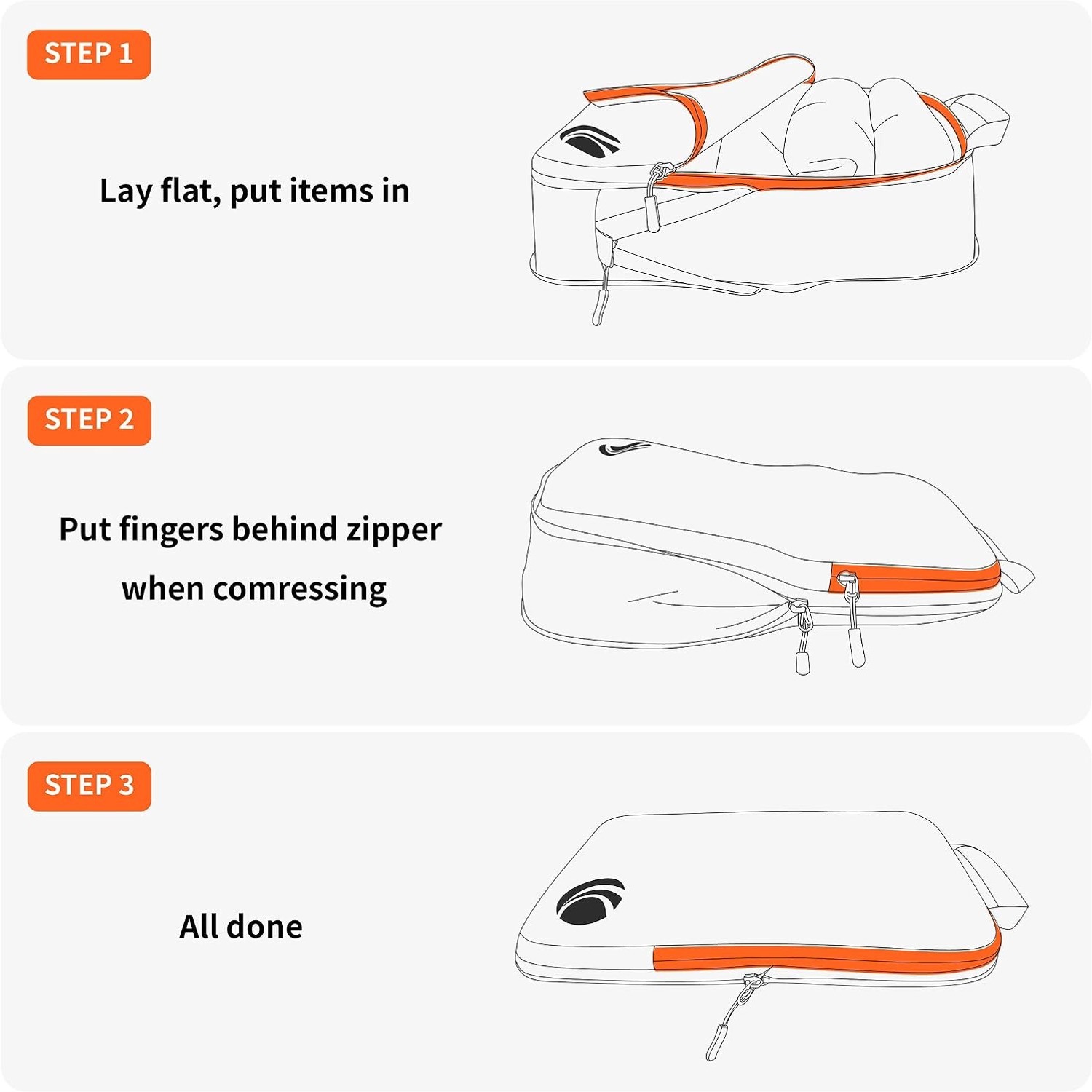
Each clothing cube has a main opening and a second zip around its side. Pack and close the main compartment first. Then close the side zip to draw the cube down from about 10 cm deep to about 4 cm.
Think of compression as a way to reduce the depth of a clothing bundle. The result will depend on what is inside and how much you pack. A cube filled with soft clothing will behave differently from one holding thick or stiff items.
No fixed percentage of space saved is stated for this set. The listed compressed depth is a guide, not a promise that every load will reach the same shape.
There is no pump involved in the described method. These compression bags for clothes work through their side zips. If a zip is difficult to close, stop and reduce or rearrange the contents rather than trying to pull harder.
Start with your suitcase measurements
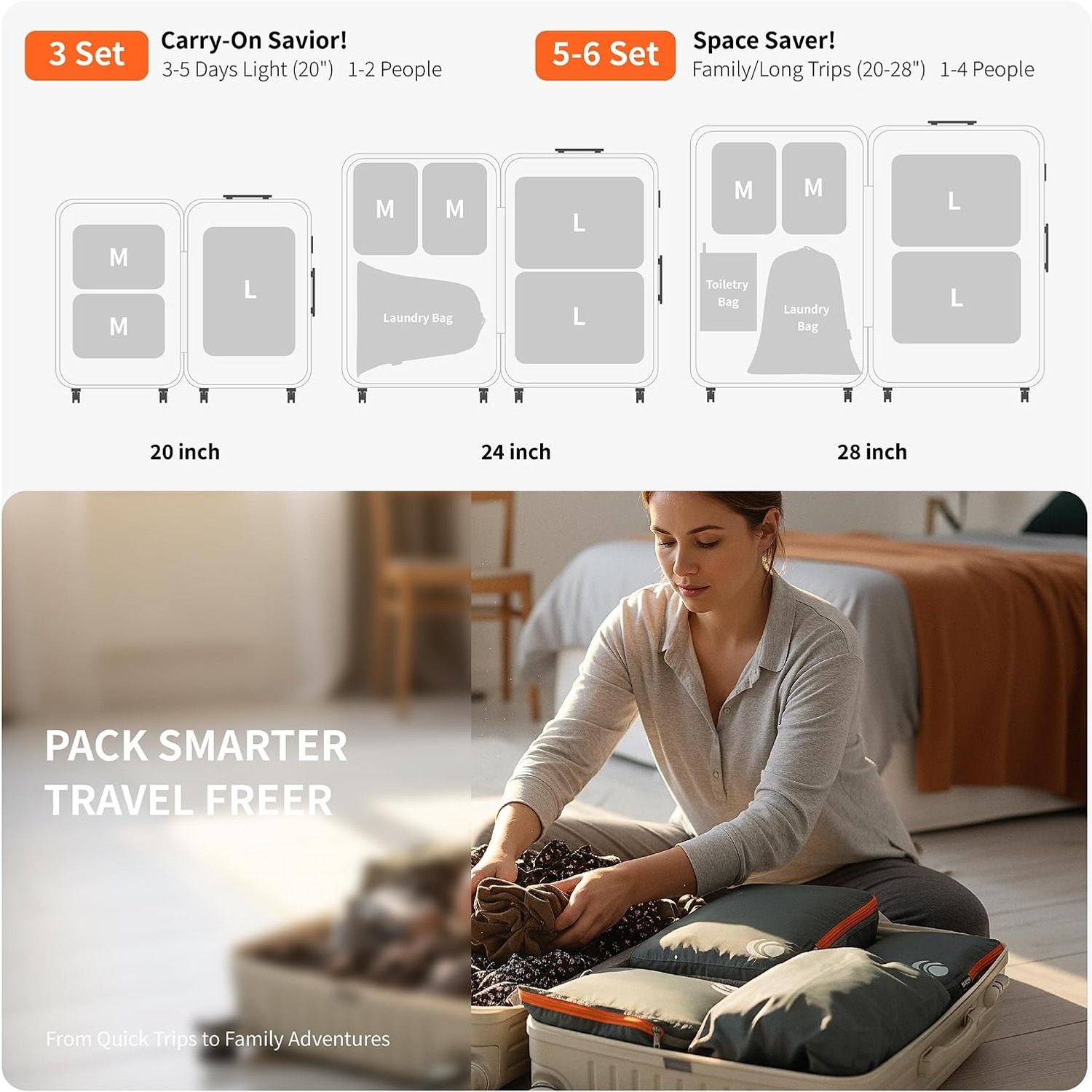
The maker suggests the set for a 20 to 28 inch suitcase. That is a useful starting point, but suitcase sizes are usually not enough to settle the fit. The inside shape matters too.
Measure the usable space inside your case. Look for areas taken up by wheel housings, handle channels or curved corners. Compare that space with the length and width of each cube before thinking about stacking.
The large packing cubes have a footprint of 35.6 x 23.5 cm each. The medium packing cubes have a footprint of 25.4 x 17.8 cm each. Compression reduces depth, so do not assume it will make their length and width much smaller.
Try a simple layout before your first trip. Put the empty cubes in your suitcase, then check the arrangement again once packed. Leave room for anything you plan to carry outside the cubes, rather than treating every spare gap as clothing space.
Choose a system you can remember
The main benefit of suitcase organisers is knowing where things are. A complicated system can undo that benefit, especially when you are tired or packing up quickly.
Sorting by clothing type is an easy place to start. Keep tops together, give smaller items their own cube, and use the remaining space for the rest of your clothing. This makes it easier to find one item without disturbing everything else.
Another option is to group clothing by part of the trip. If you are staying in several places, keeping the next stop's clothing together may suit you better than sorting every item by type.
Choose a method that makes sense to you. Travel packing cubes are most useful when you can remember what is inside each one without opening the full set.
Sharing the set with a family
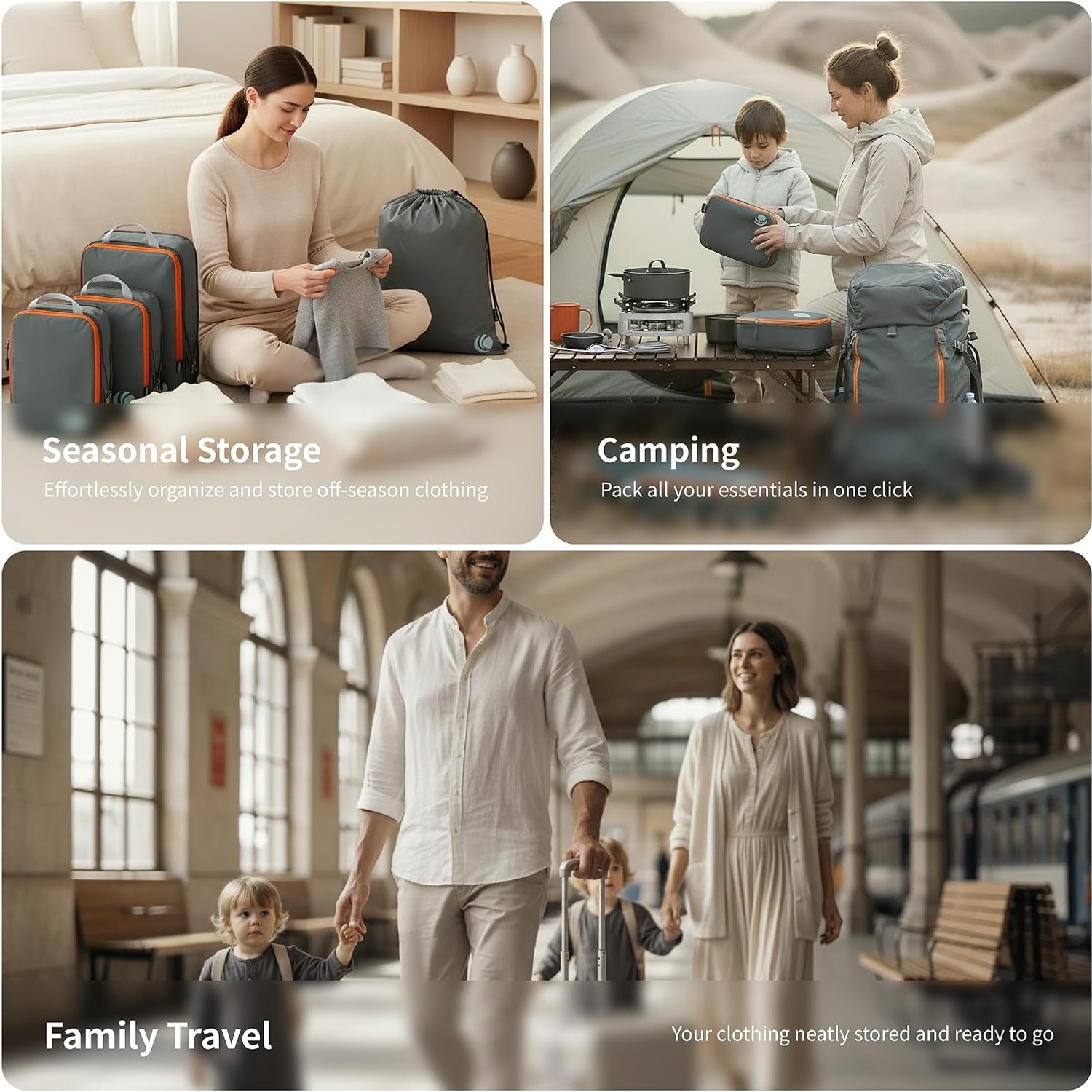
The maker suggests this set for families as well as longer trips. Four clothing cubes give you separate compartments to assign, although the amount each person can pack will depend on their clothes.
You could give each traveller a cube or share the larger cubes between people. For some households, it may make more sense to group similar items together rather than divide the bags equally.
Family packing organisers can help with shared luggage, but they do not remove the need to edit a packing list. Lay out the clothes first and check what is needed before deciding which cube gets which items.
Keep the laundry bag easy to reach. Having a separate place for worn clothes from the start is simpler than finding a spare bag halfway through the trip.
What the material and construction mean
The set is made from lightweight nylon described as water resistant. It has YKK zips, double stitching and a carry handle on each cube. The colour is grey with orange zip trim.
Water resistance should not be confused with waterproof protection. Do not rely on these bags to protect clothing during immersion or to contain a leaking bottle. Keep any items that need stronger protection in packaging suited to that task.
The handles give you a way to lift each cube between your case and your accommodation. Packing cubes with handles can be handy when you want to move a whole clothing group without taking the contents out.
The record does not specify the set's weight or country of origin. If either is important to your decision, confirm it before ordering rather than estimating from the pictures.
Packing for a longer trip
Packing cubes for long trips help keep a case ordered as its contents change. At departure, most clothing is clean. Later, the balance shifts, and your packing system needs to allow for that.
Do a trial pack with the clothes you actually intend to take. Close each main compartment, then try the compression zip. Check that the suitcase closes normally with the packed cubes in place.
Compression does not reduce baggage weight. A smaller clothing bundle still weighs the same, and the organisers add their own unspecified weight. Weigh the finished case if you are working close to an airline limit.
It is also worth leaving yourself some flexibility. A packing plan that only works when every item is folded perfectly may be hard to repeat on the way home.
Toiletries and worn clothing
The flat toiletry bag gives smaller essentials a separate place. At 21.6 x 15.7 cm, its length and width are stated, but its depth and capacity are not. Check your own items rather than assuming a full collection of bottles will fit.
No airport liquid-security approval is provided. If you need a bag for security screening, check the rules that apply to your journey.
The drawstring laundry bag is there to separate worn clothing from clean items. It is not described as having odour control or antibacterial properties. Treat it as an organising bag, not as a replacement for drying or washing clothes.
Before repacking, check that anything going back into the set is suitable for storage. Keeping damp items enclosed is not a good way to care for either clothing or bags.
Using the cubes between trips
These cubes do not have to sit unused until your next departure. The listing also describes them as suitable for clothing storage in a wardrobe or drawer.
You might use them to group socks, underwear or other clothing categories. Check drawer clearance first, particularly if you plan to use a cube without compressing it.
As wardrobe clothing organisers, they can keep a small clothing group together so it is easier to move when needed. Use the sizes in the same practical way you would in a suitcase, without filling them beyond what the zips can comfortably hold.
If you prefer to put the set away, the cubes fold flat. Make sure every piece is dry before storing it.
Care without guesswork
Detailed washing instructions are not supplied in this record. As a general suggestion, gently hand wash the bags when needed and allow them to air dry fully. Follow any care label that arrives with the set.
Do not assume machine washing or tumble drying is suitable. When instructions are missing, asking first is better than choosing a strong cleaning method that may not suit the item.
While packing, keep loose fabric away from the zip path. If a zip catches, pause and free the fabric rather than forcing it. Small habits like these make the packing process less frustrating.
The short version
This six piece packing cube set suits a packing routine built around separate clothing groups, a dedicated toiletry bag and a place for laundry. Its four compression cubes use side zips to reduce packed depth, while handles help you move them as complete units.
Check the measurements against your suitcase, test the layout with your own clothing and keep baggage weight in mind. If the fit works, you have a clear system for finding what you need without turning the whole case upside down.