
The complete guide
Decanting a pantry without regretting it
Why matching containers hold more
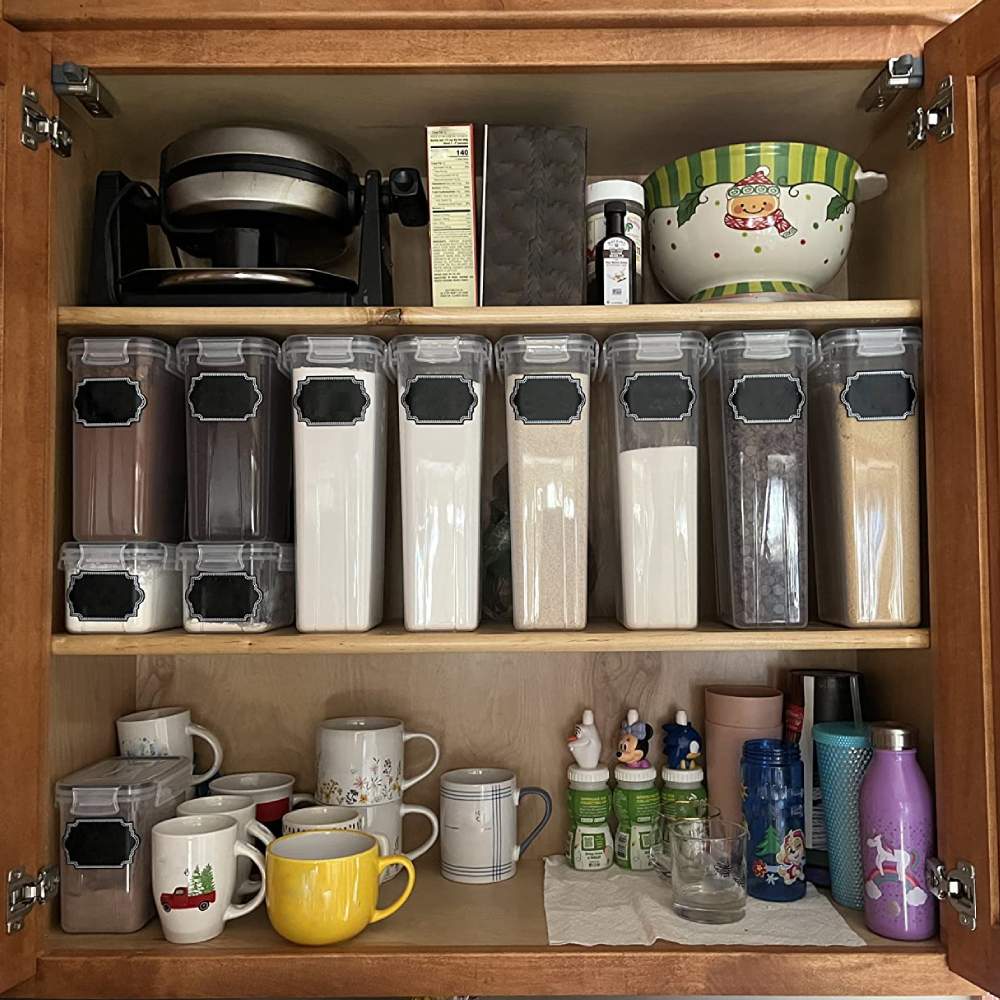
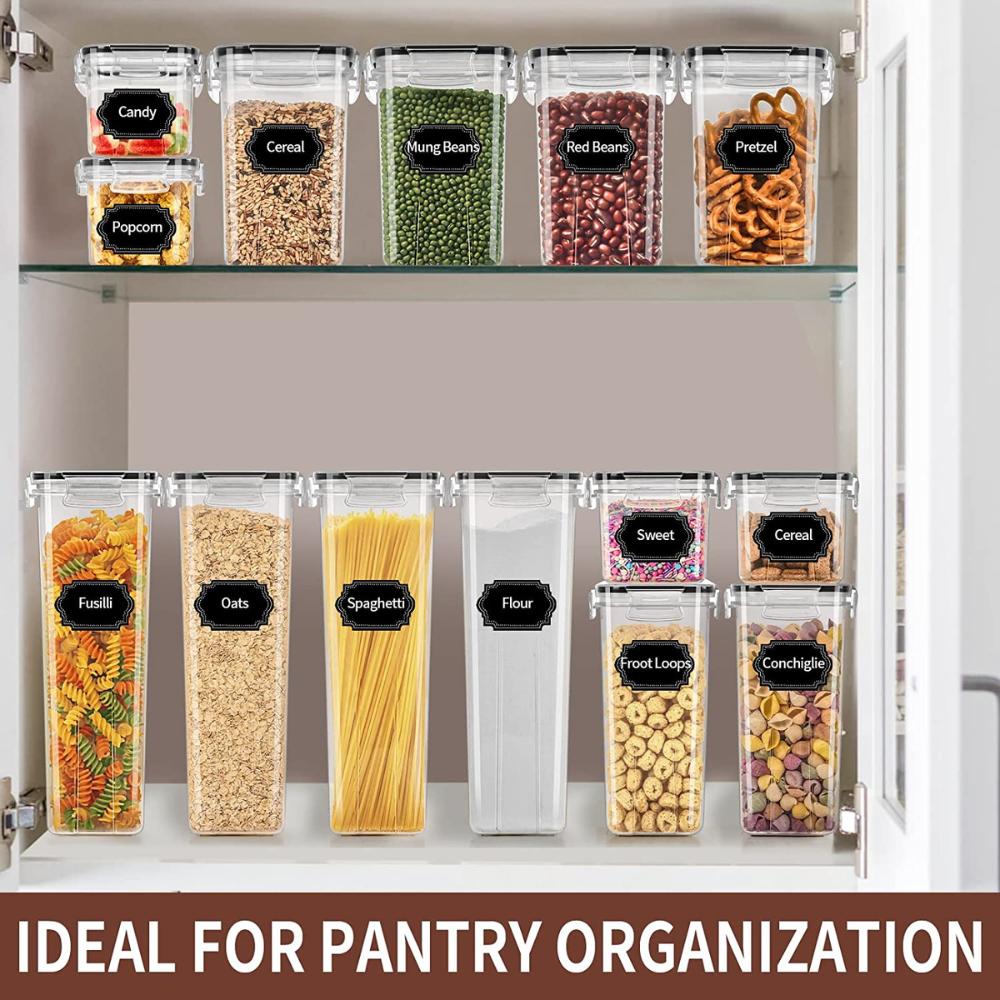
A pantry shelf is limited by its most awkward object. One tall cereal box, one leaning bag of rice, and the whole shelf gets spaced around them.
Square containers of matched sizes remove that. They sit against each other with no wasted gap, they stack instead of leaning, and the shelf holds close to what its dimensions say it should.
That is the real gain from decanting, more than the tidy look. You are not buying storage space, you are recovering the space you already had.
What the four catches are actually for
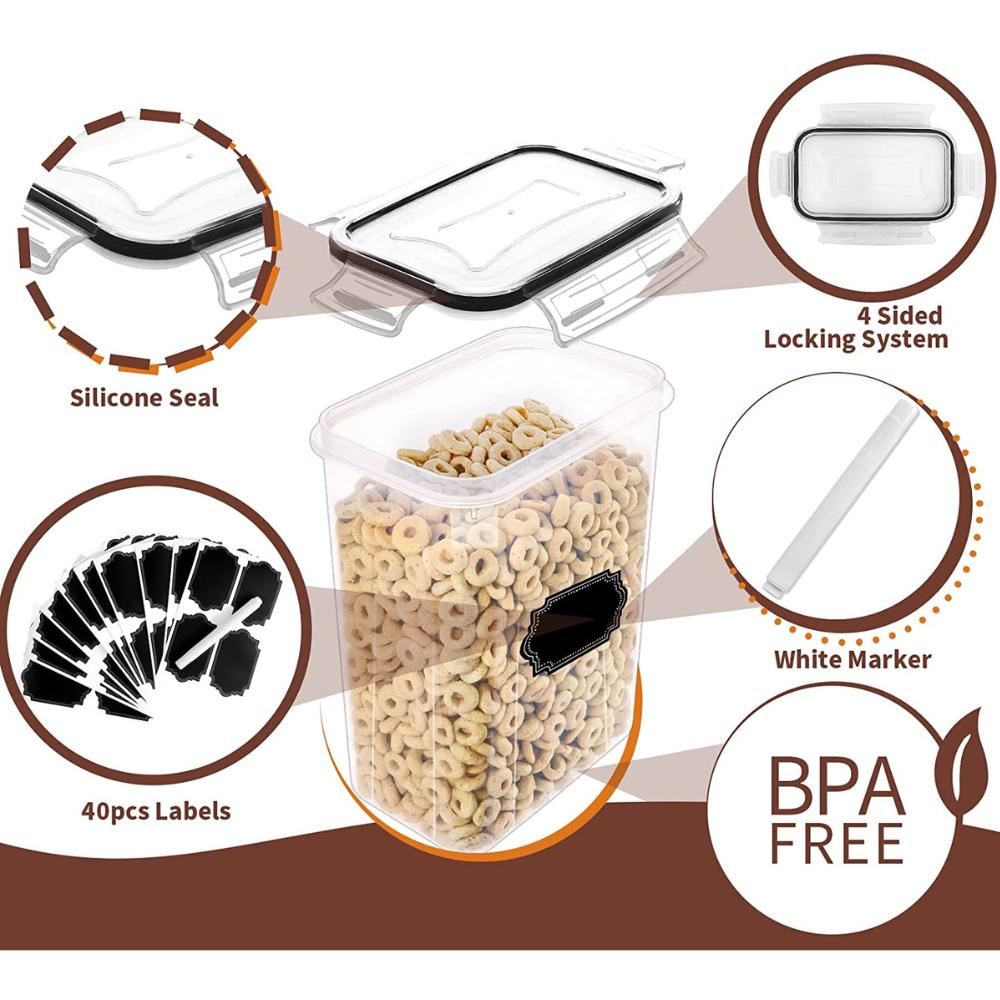
Most containers with a silicone seal will seal if you press hard enough in the right places. The problem is that hands press in two places and a lid has four sides.
The catches clamp the lid down evenly all the way round. That is what makes the seal consistent, and consistency is the whole point: flour that stays dry, cereal that stays crisp, and nothing getting in.
Two habits keep it working. Wipe the rim before you close it, because a single crumb under the gasket breaks the seal on that side. And close all four catches, not the two nearest you.
What to put in them, and what not to
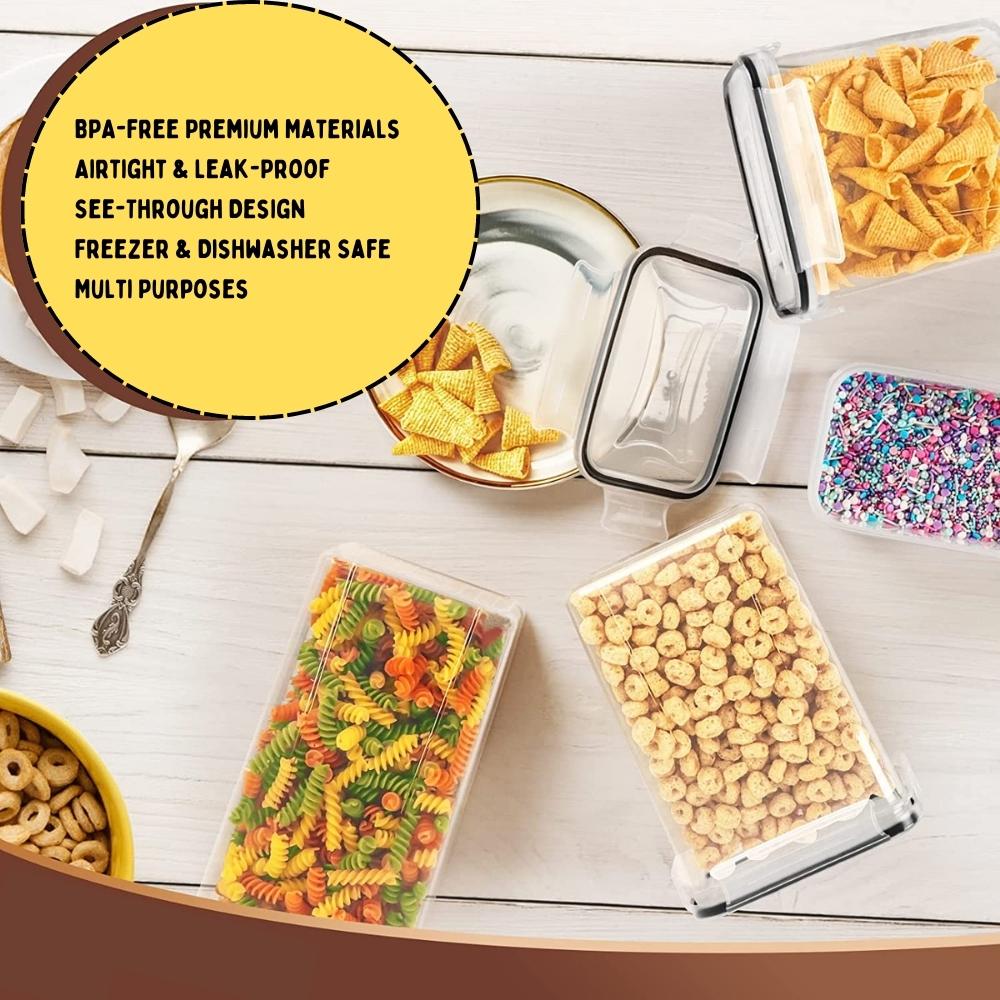
The specification is clear about what these are for: dry goods. Flour, sugar, pasta, rice, grains, cereal, nuts, snacks.
It is equally clear about what it does not say. There is no microwave rating and no freezer rating in the specification, so we do not claim either, and neither should you assume it. If you want to reheat or freeze, use containers sold for that job.
Leak resistant is also a precise term. It means a closed container will not weep on the shelf. It does not mean you can lay one on its side full of soup in a rucksack.
Labels earn their place
The hidden cost of decanting is losing the packet, and with it three things: what it is, how long it cooks, and how old it is.
Two of those matter in practice. Write the name and the date. Cooking times you can look up; a container of unidentified white powder in six months is genuinely annoying, and so is wondering whether the nuts are from last year.
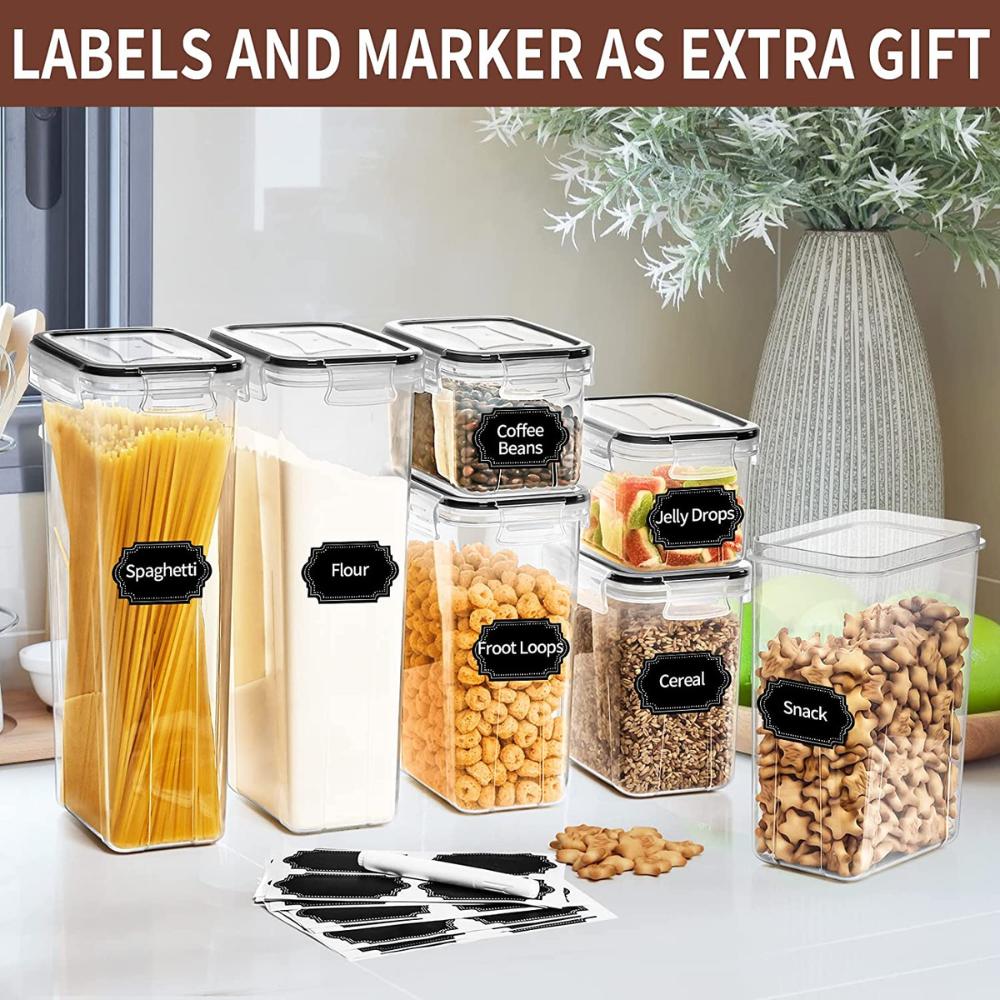
Forty labels and the pens come in the box, and they wipe clean, so a container that held quinoa in March can hold porridge oats by June without a residue of old handwriting.
Cleaning between contents
Plastic takes on the smell of anything strongly aromatic: chilli flakes, coffee, curry powder.
Washing is usually enough, but the part people miss is drying the silicone seal. Water sits in the channel behind the gasket, and if you refill and clamp the lid on a wet seal, the container smells musty within a week.
Dishwasher, then leave the lids upside down for an hour. That is the whole routine.