
The complete guide
Parking several bikes without them falling on each other
The domino problem
Bikes leaned against a wall are held up by friction and optimism.
Three of them lean against each other, and the whole row depends on the end one staying put. Something knocks it, or a tyre goes soft overnight, and they go down as a set. The bike at the bottom takes the weight of the other two, usually on the derailleur, which is the most expensive part to bend.
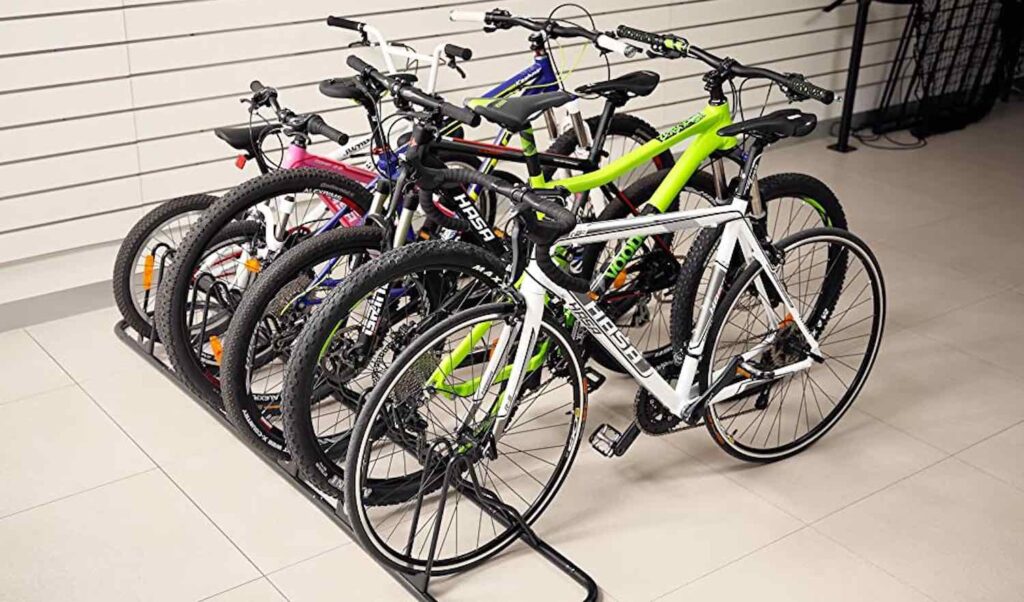
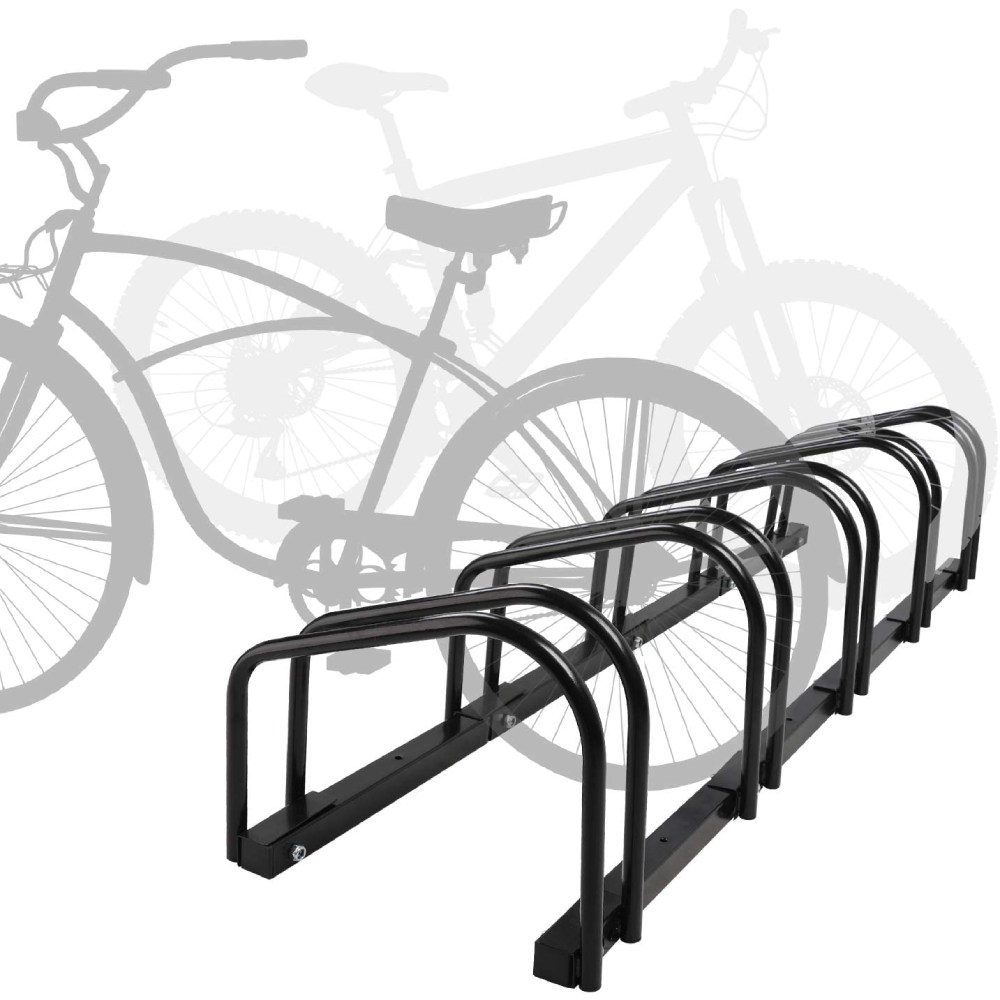
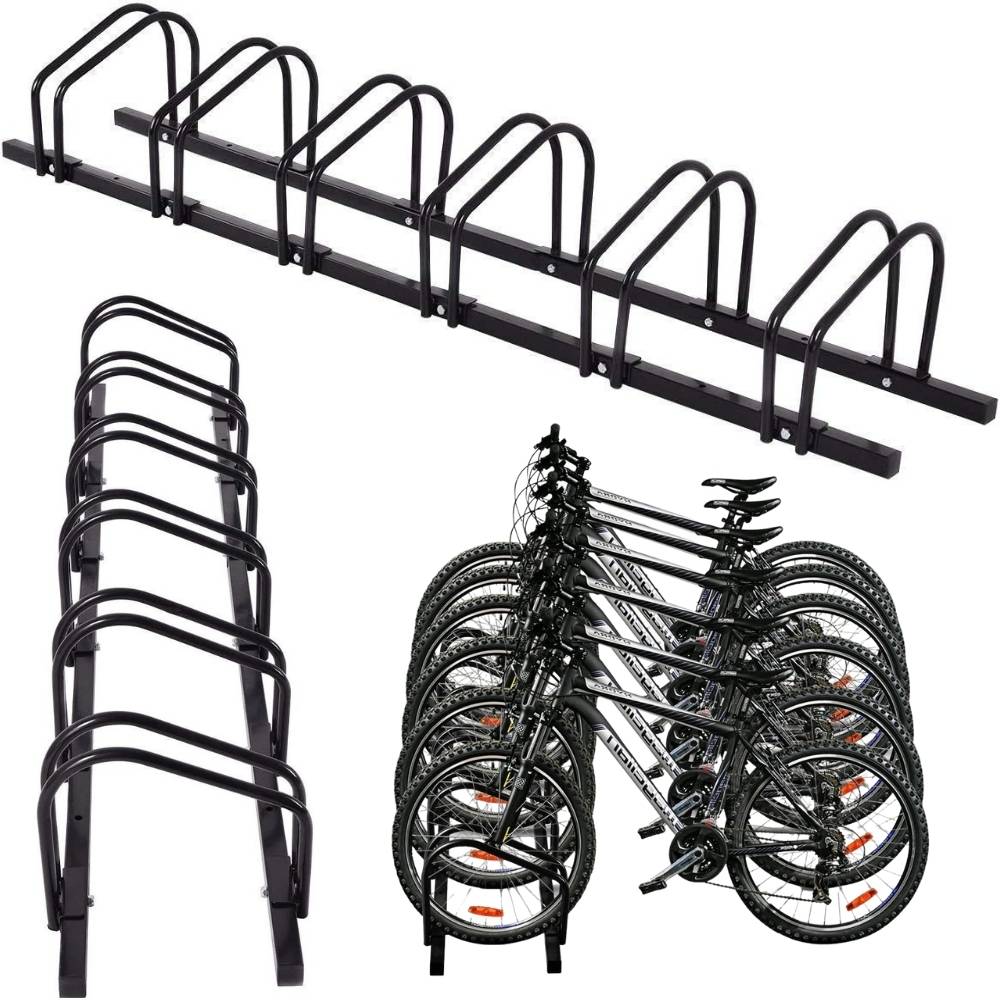
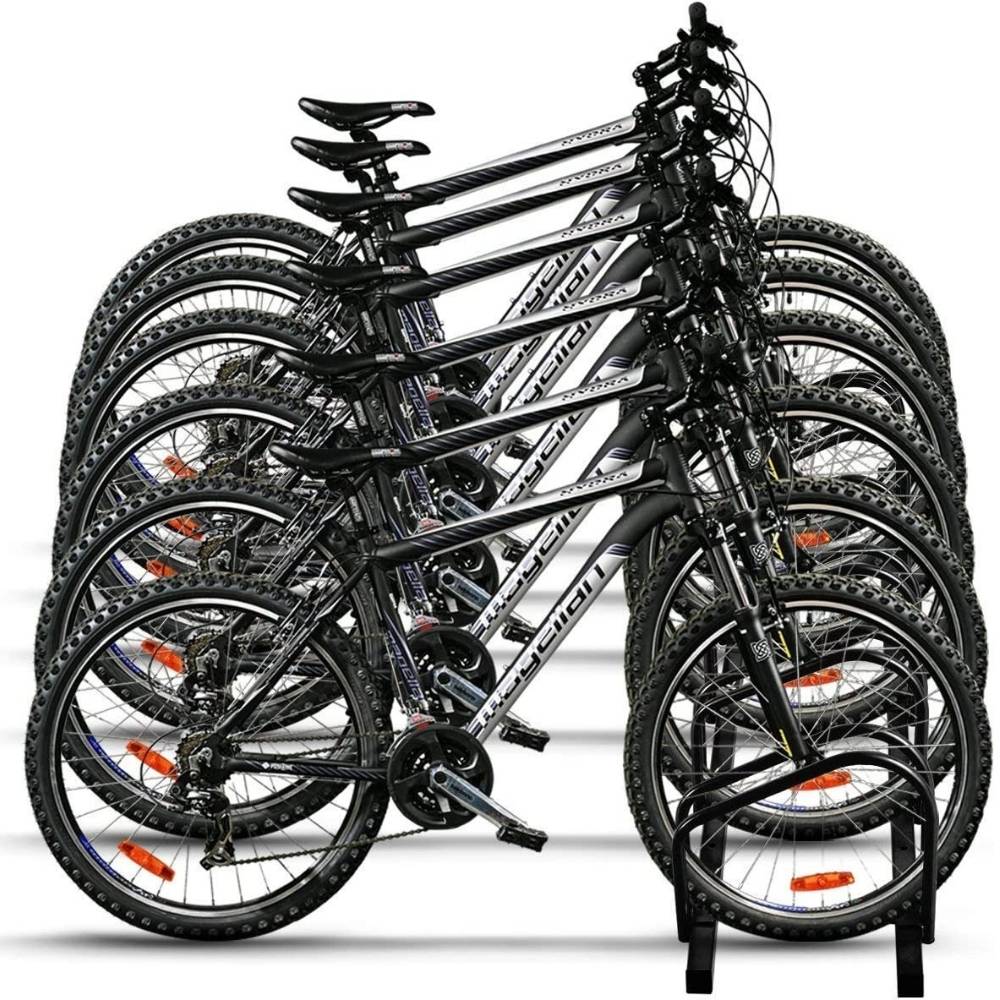
A rack removes the dependency. Each bike stands in its own holder, and nothing rests on anything else, so a knock moves one bike rather than three.
Why two plates per bike matter
The cheap version of this product is a single row of slots.
A single slot holds the wheel at one point, so the bike can pivot around it, and the upright part of the holder gradually splays outwards as bikes are pushed in and out. A wider holder grips less. Over a couple of years the rack quietly stops doing its job.
Front and back plates fix the wheel at two points along its circumference and brace each other, so nothing widens. That is the difference between a rack that holds bikes now and one that still holds them in five years.
Freestanding is a real advantage
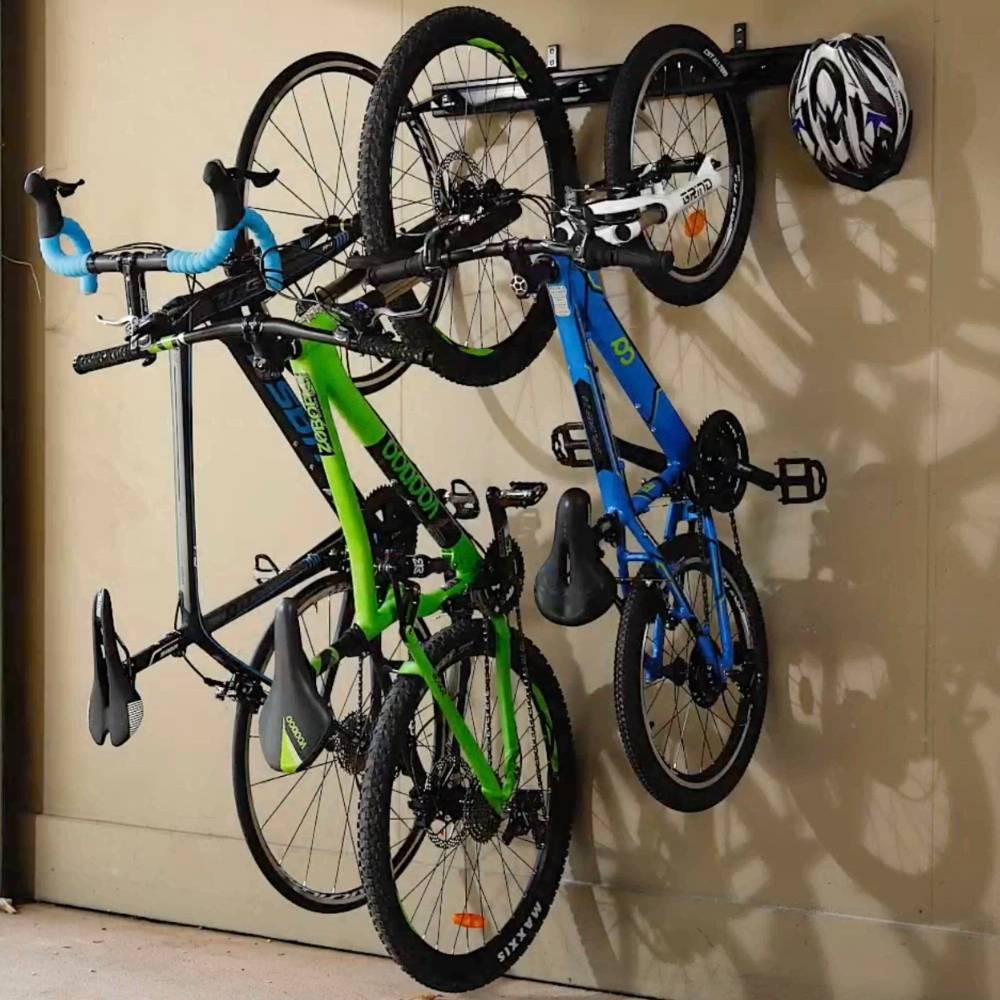
Everything else in bike storage wants to be screwed to the building: wall hooks, tracks, ceiling hoists.
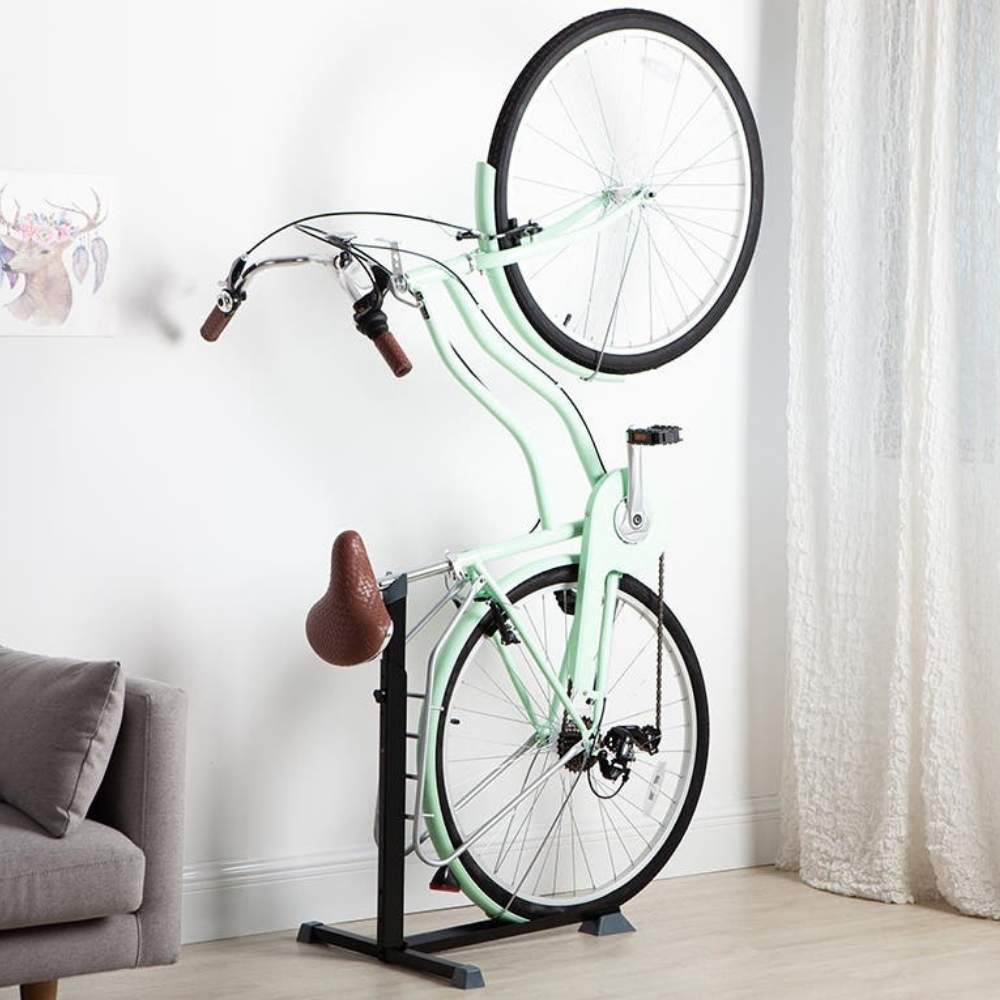
This does not. That matters if you rent, if the garage walls are breeze block that crumbles, or if the layout is going to change when the car gets bigger.
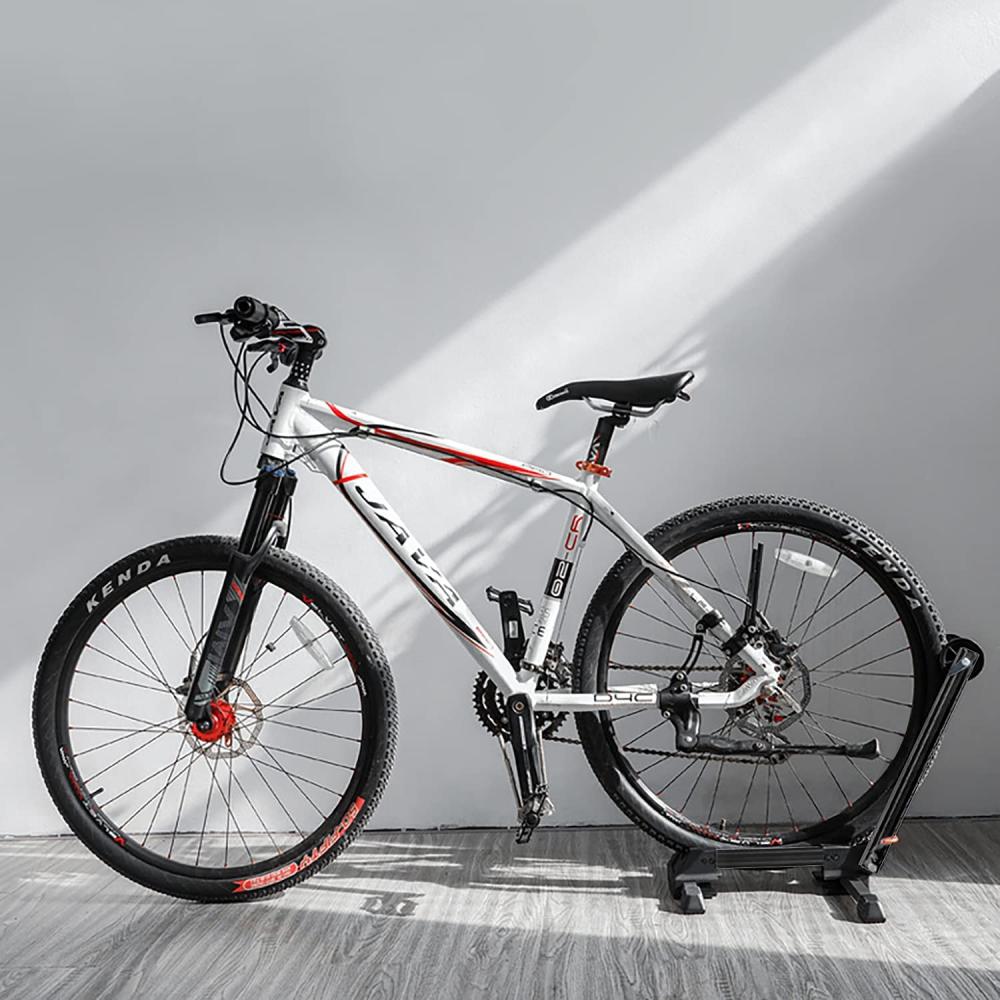
It also means the rack can be taken outside for a wash down, moved to the side for a job, and picked up entirely when you move house.
Getting the bikes in cleanly
Two habits make a multi-bike rack pleasant rather than fiddly.
Alternate the directions. Handlebars are the widest part of a bike and they are all at one end. Park one facing in, the next facing out, and each set of bars sits beside a narrow rear end instead of another set of bars. On three bikes this is often what makes the difference between comfortable and cramped.
Push the tyre right down. The groove is cut at a holding angle, and a wheel that is only half seated feels loose because it is. If a bike wobbles, the first thing to check is whether the tyre is fully down and whether the groove has collected grit.
Indoors, and why that is stated
The rack is recommended for indoor use, and it is worth taking that at face value.
Powder coated steel copes well with a dry garage and less well with permanent exposure to rain. More to the point, a rack does nothing for the bikes in weather terms: a bike parked outdoors in a rack gets exactly as wet as a bike leaning on a fence.
If the bikes have to live outside, the rack keeps them upright, and a cover or a shelter is a separate purchase doing the other half of the job.