
The complete guide
Storing a bike upright in a small home
The arithmetic of a vertical bike
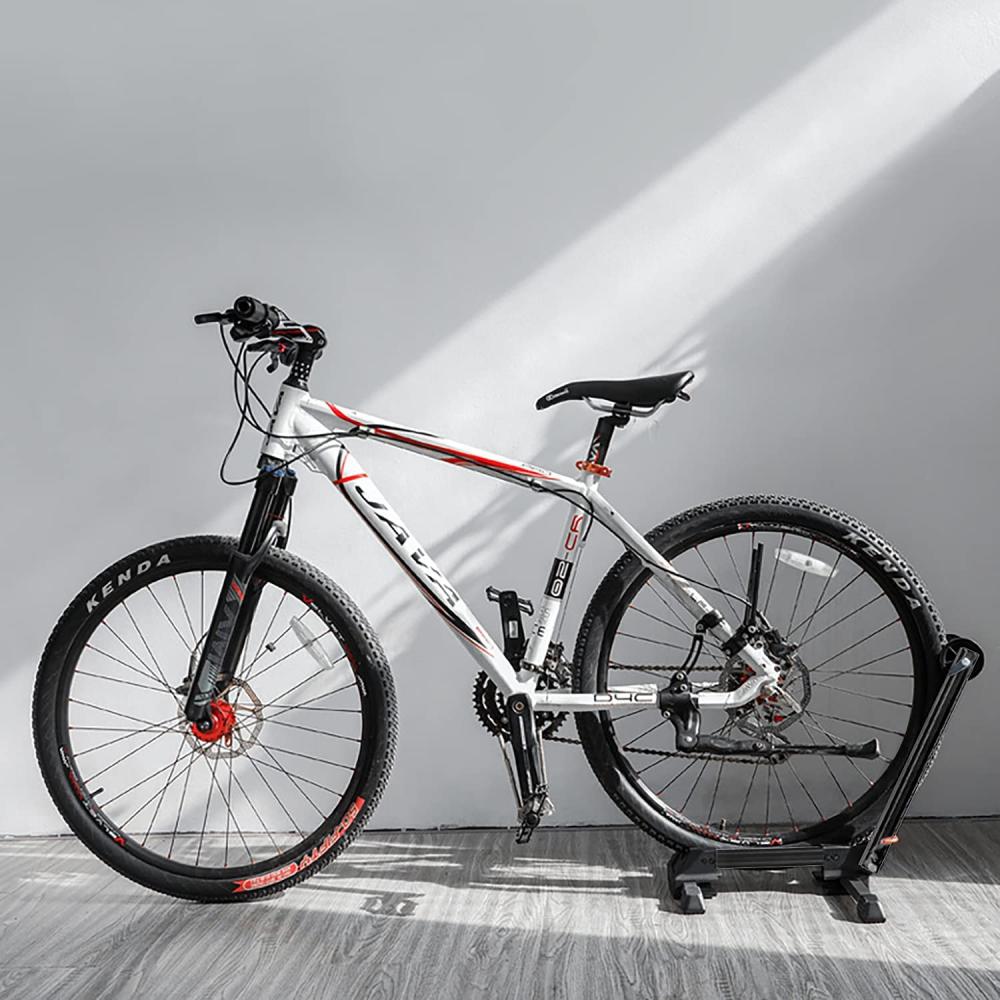
A typical adult bike is about 1.7 metres long and about 60 centimetres wide at the bars.
Lying against a wall, it eats 1.7 metres of that wall and roughly half a metre of floor coming out from it. In a hallway that is most of the hallway.
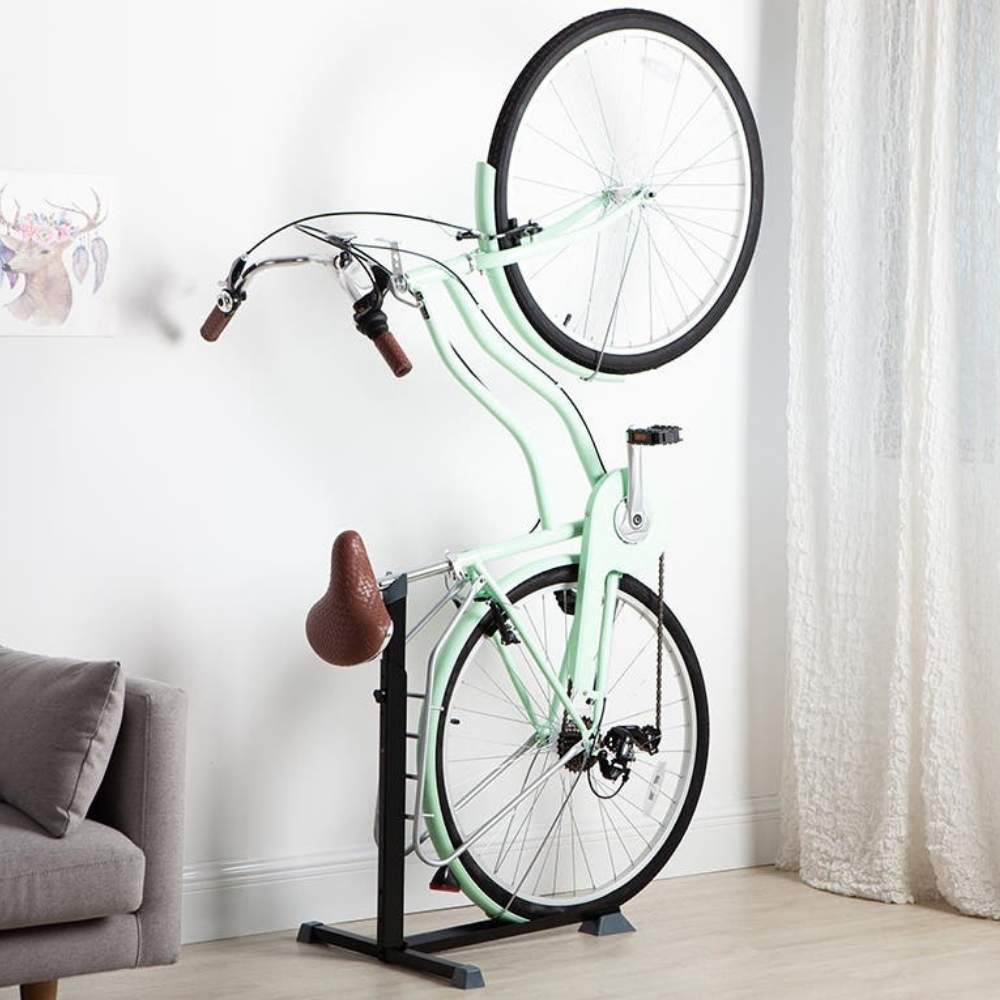
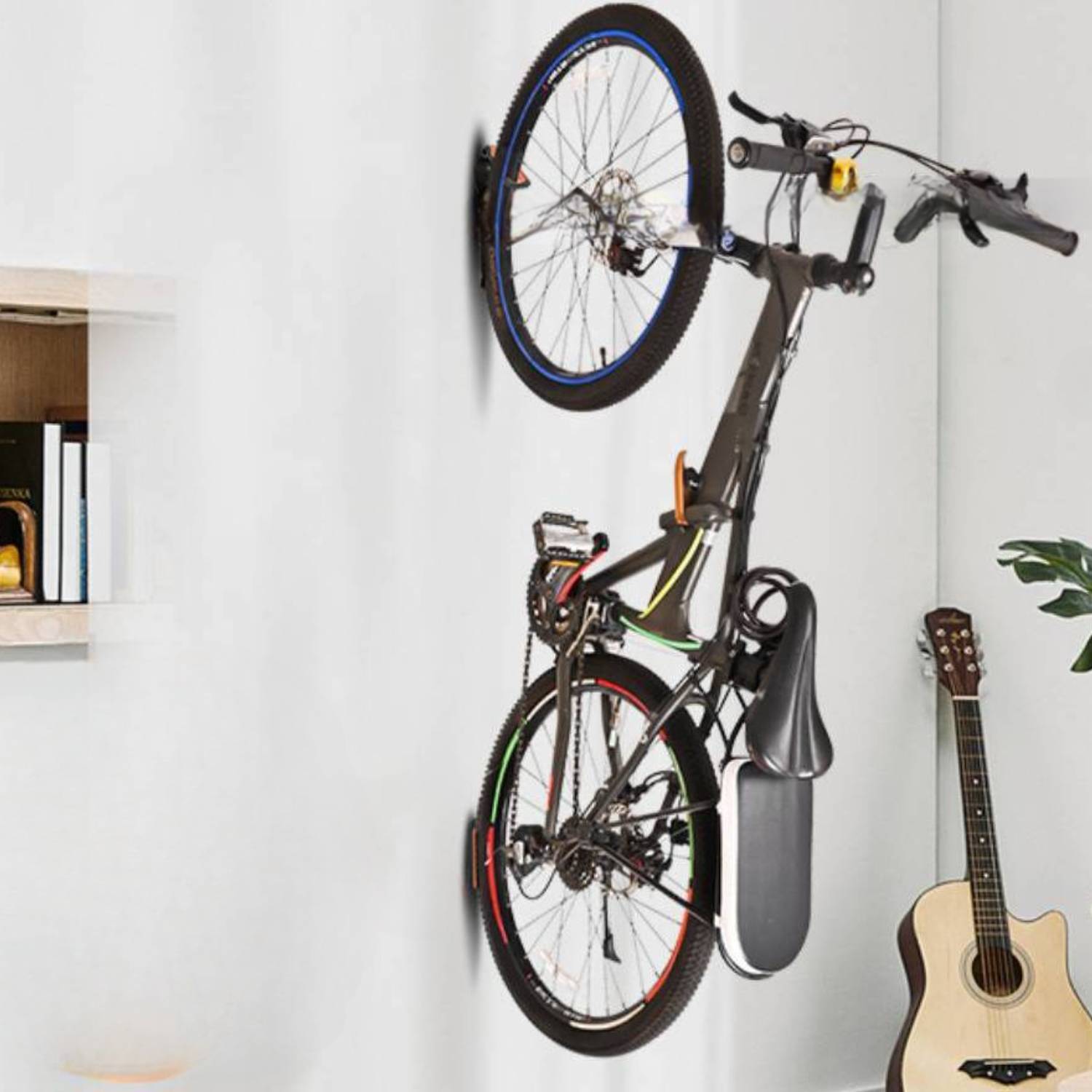
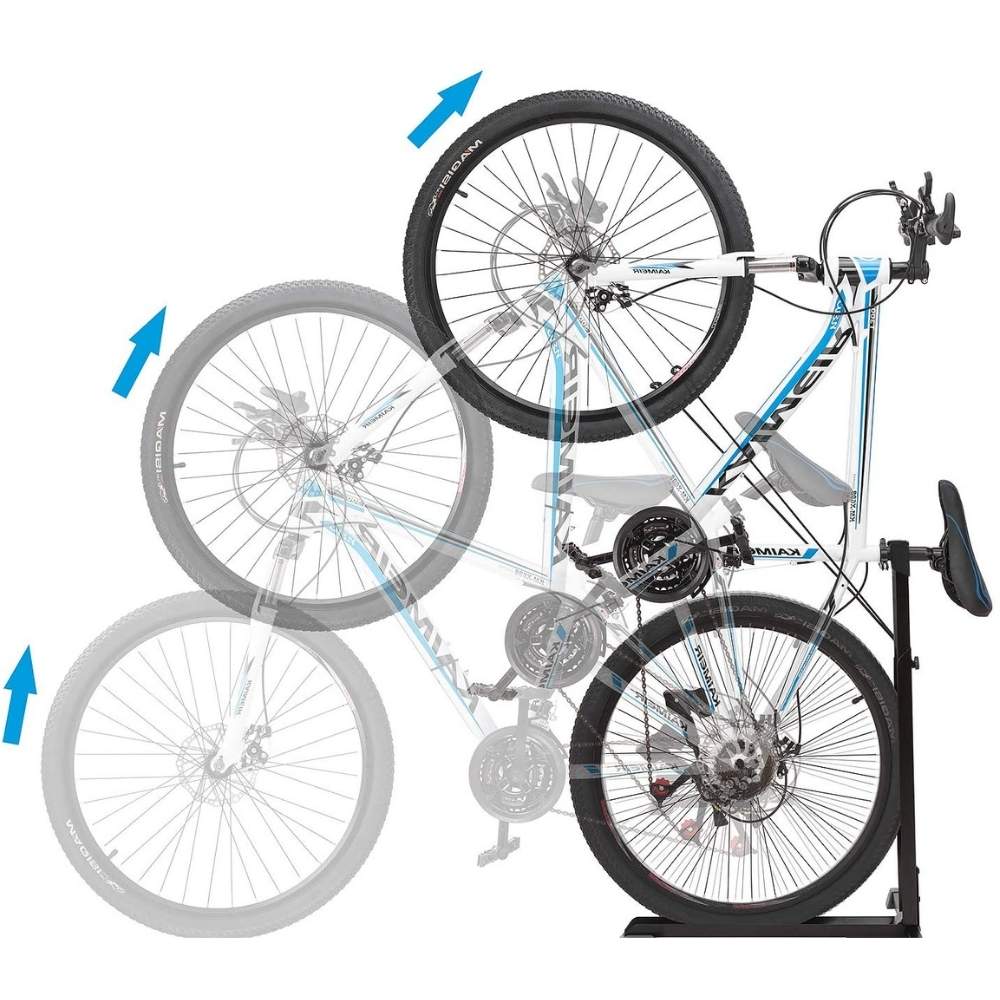
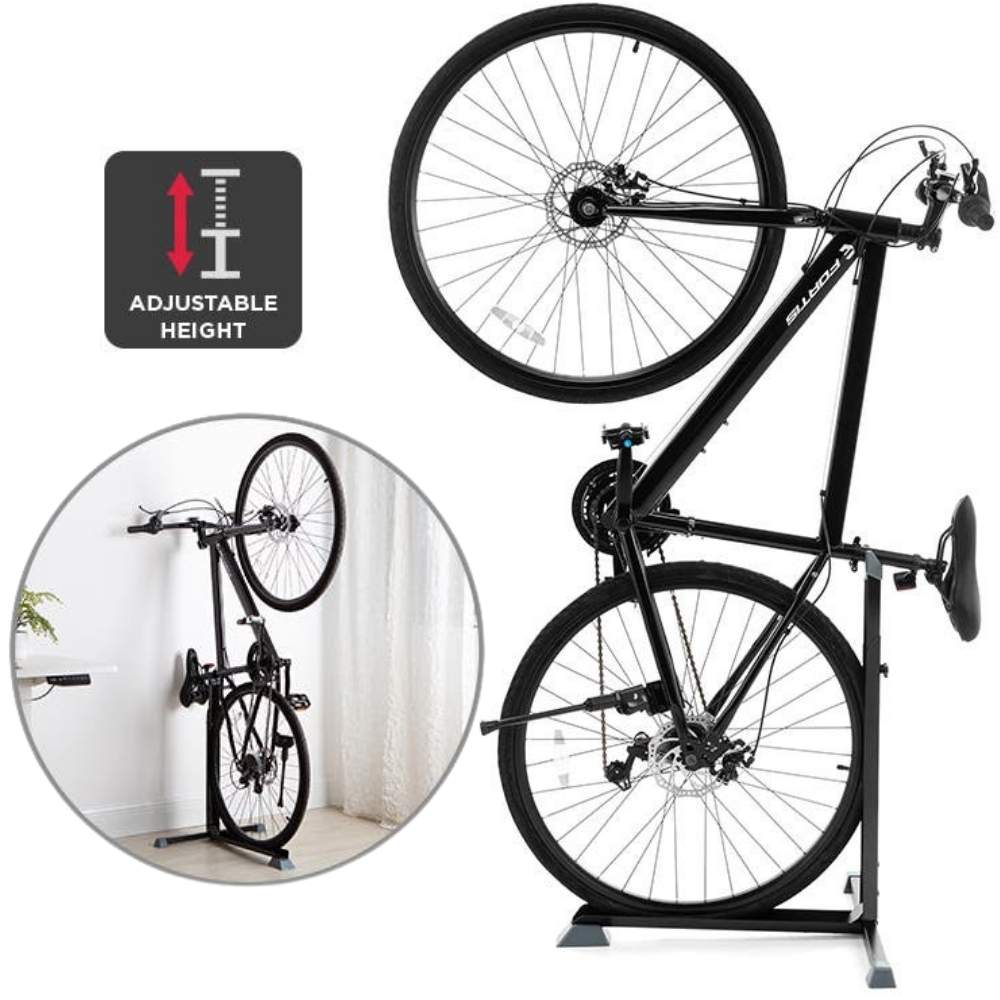
Standing on its rear wheel, the footprint becomes the width of the bars and the depth of a wheel. The bike goes up rather than along, and the space it used to occupy becomes usable again.
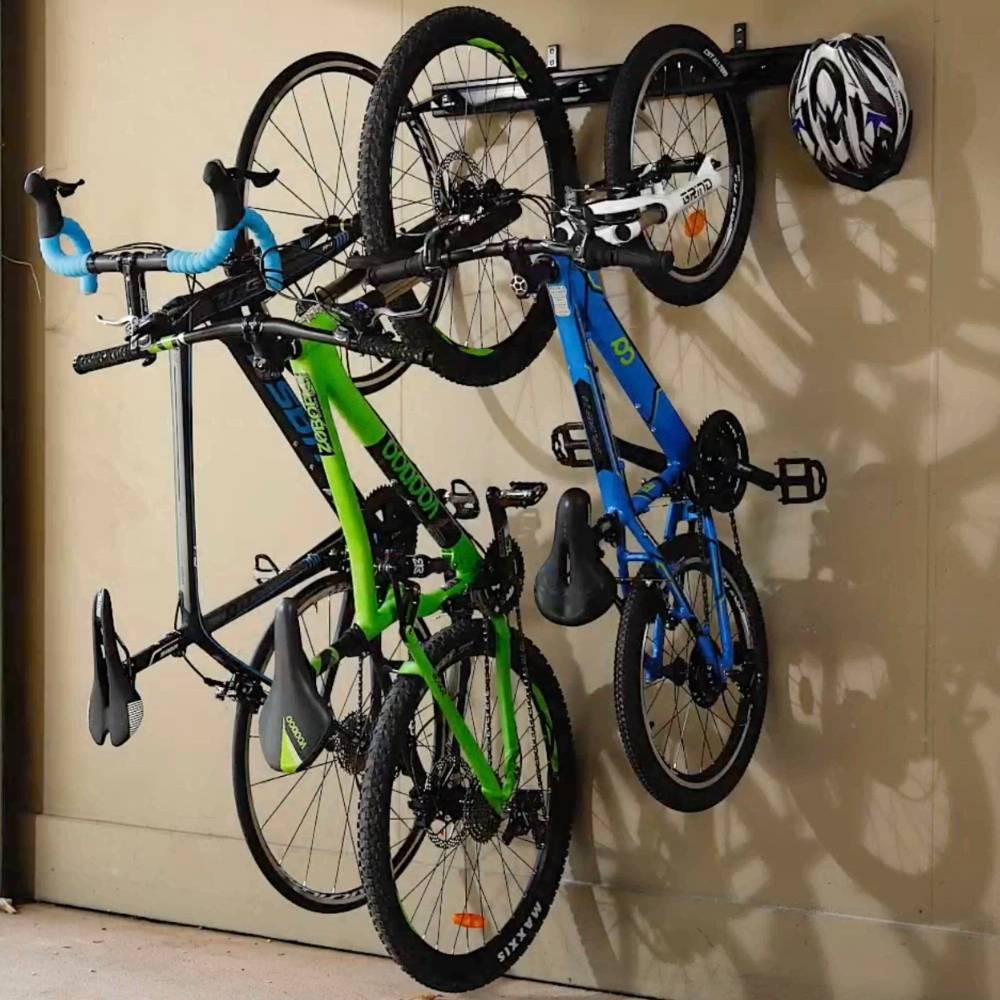
That is the entire argument for vertical storage, and it is why it wins in flats, hallways and garages that are already full.
Why rolling beats lifting
Wall and ceiling hooks achieve the same saving, and plenty of people buy one, use it for a fortnight and go back to leaning the bike on the wall.
The reason is always the lift. Getting a bike onto a hook means taking its full weight above waist height and holding it steady while you locate the wheel on the hook. A 9 kg road bike is fine. A 15 kg hybrid with mudguards, a rack and a lock on it is a different job, and doing it twice a day in a narrow hallway gets old fast.
Rolling the rear wheel up a ramp changes the movement completely. The floor takes the weight for most of the travel and you are steering rather than lifting. That is what makes vertical storage something people keep using.
Use the strap
The most common mistake with any upright stand is treating the strap as optional because the bike looks stable without it.
It usually is stable, until something knocks the bars, or a child squeezes past, or the front wheel turns and the balance point moves.
The brace positions the bike. The strap keeps it there. It takes two seconds and it is the difference between a bike that stays put and a bike that comes down on whatever is beside it.
What a stand does not do
Two claims get attached to bike storage that are worth separating out, because believing them can cost you a bike.
Security. A stand holds a bike upright. It has no lock, and it is not fixed to the building, so it offers nothing against theft. A bike stored in a shared hallway, a communal bike store or a garage that others can access still needs a proper lock, ideally to a ground or wall anchor.
Weather. A stand does not shelter anything. A bike on an open balcony in a stand gets exactly as wet as it would leaning on the railing. Covered space, or a cover, is a separate purchase.
The stand is worth having for what it does, which is to stop the bike falling over and to give you your floor back. It just is not a lock and it is not a shed.
Where to put it
Two practical points decide whether it is convenient or annoying.
Firm, level ground. The ramp works best on a hard floor. Thick carpet lets one side sink slightly, which makes the roll-up feel vague.
Room to swing. The bike pivots as it comes upright, so the handlebars sweep an arc. Leave enough clearance beside it that the bars are not hitting a door frame or a radiator on the way up.