
The complete guide
Siting an outdoor store so it lasts
Resin against the alternatives
Three materials dominate garden storage, and they fail in different ways.
Timber looks best and asks for the most. It wants treating every year or two, the felt on the roof lifts eventually, and the bottom edge of the boards is where the rot starts because that is where water sits.
Metal does not rot, but it rusts at the seams and around the fixings, and it is loud in rain and prone to condensation.
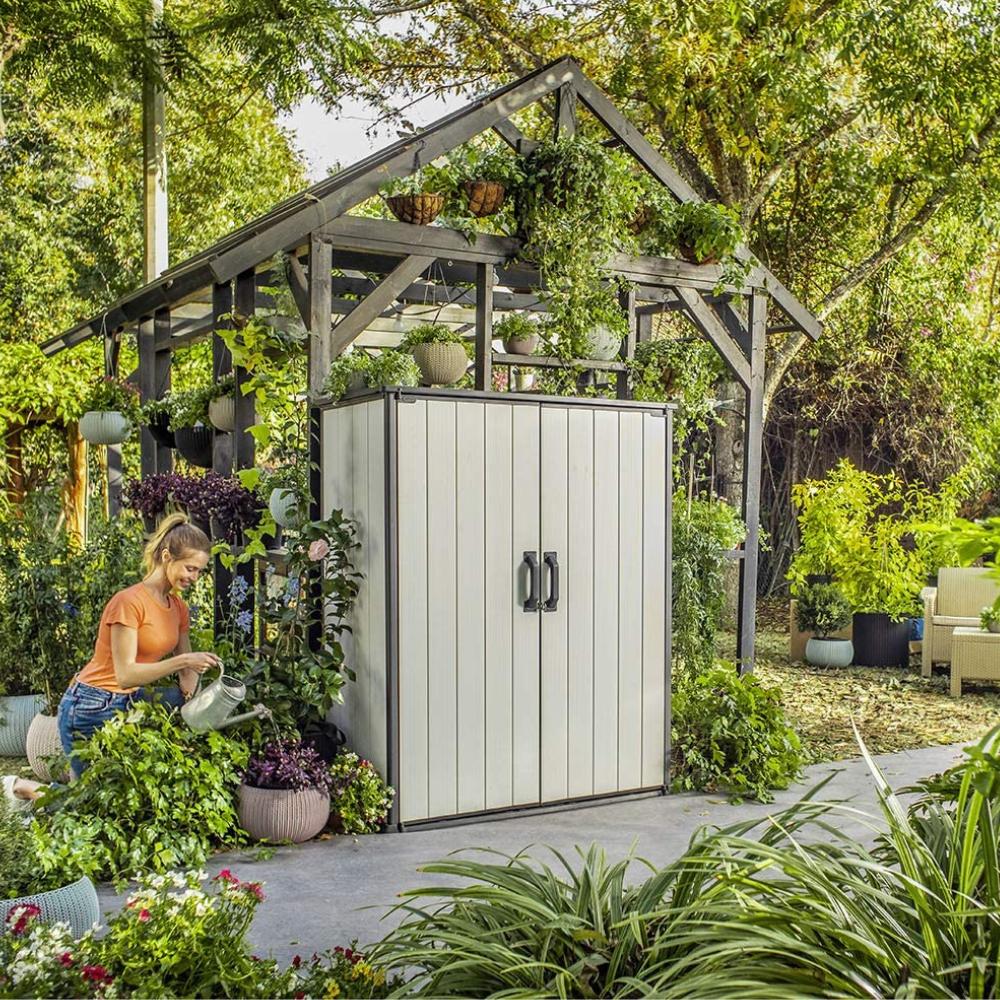
Resin does neither. It does not need painting, treating or re-felting, and it does not corrode. The trade is that a plastic shell needs help staying rigid, which is what the steel reinforcement here is for.
For most people the deciding factor is honest: how much maintenance are you actually going to do? If the answer is none, resin is the one that copes with that.
The base matters more than the shed
The single biggest thing that shortens the life of any garden store is the ground under it.
A firm, level base keeps the structure square. Square means the doors close properly, and doors that close properly keep water out and stay easy to use.
Set the same shed on soft ground or wobbly slabs and it slowly racks out of shape. The doors bind, then they stop meeting, then rain gets in. Nothing about the shed has failed; the ground did.
So build on concrete, paving or a proper timber base, check it with a level, and only then assemble.
Let the water go somewhere
Waterproof describes the shed, not the site.
Water that runs off the roof has to go somewhere, and if the shed sits in a slight hollow it goes around the base and stays there. Leaves and grass cuttings pile up against the sides and hold that damp permanently against the shell.
Two minutes of thought at siting time saves it: put it where water runs away, and sweep around the base occasionally. That is the whole of outdoor-store maintenance.
What is and is not in the box
Worth being clear, because both are easy to assume.
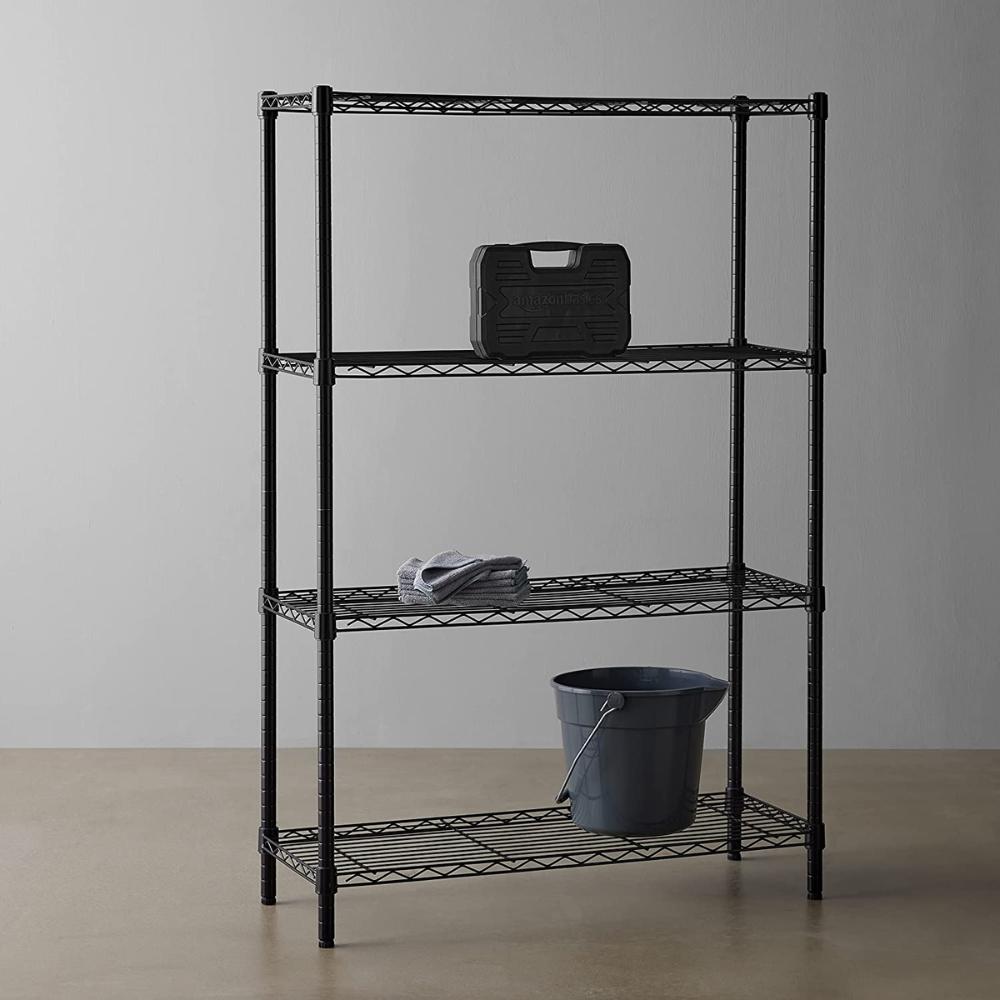
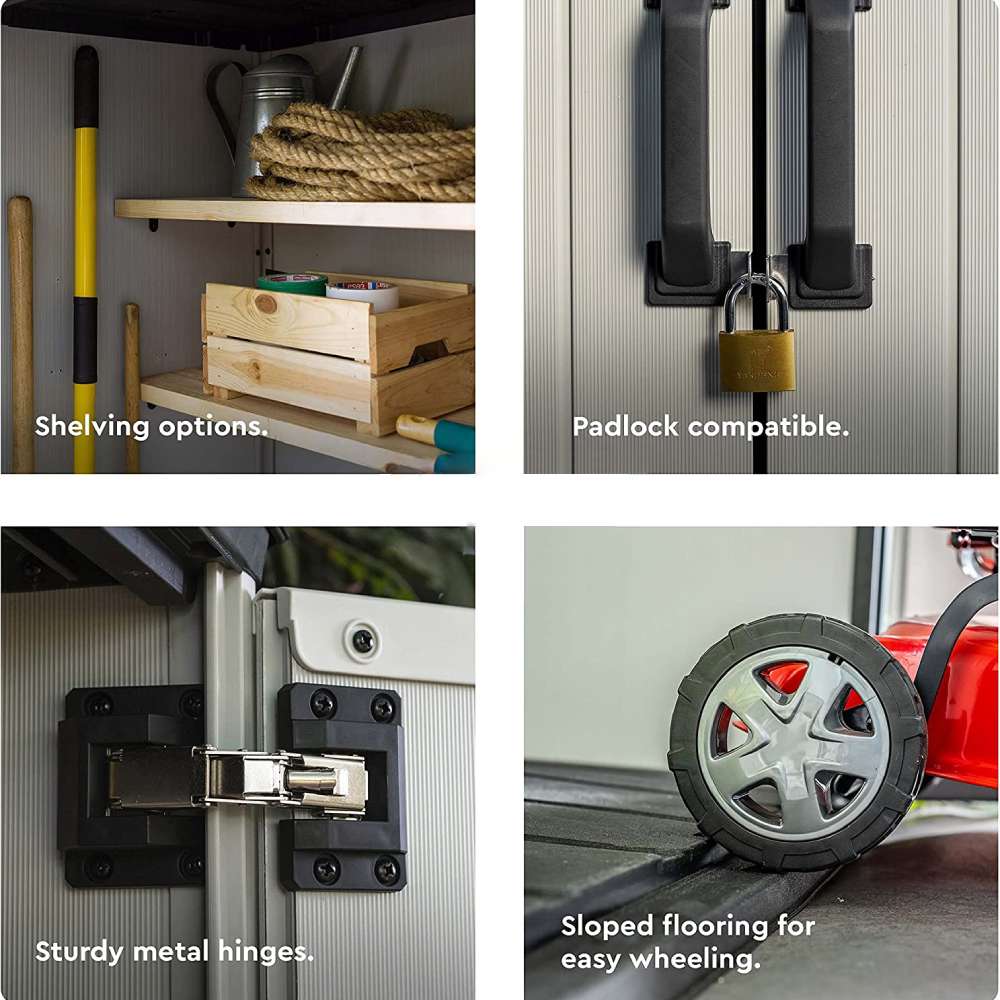
The shelving brackets are included. The planks are not. You supply two lengths of timber and cut them to the internal width. That is deliberate, since it lets you choose the depth and the thickness, but it does mean a trip for timber if you want shelves on day one.
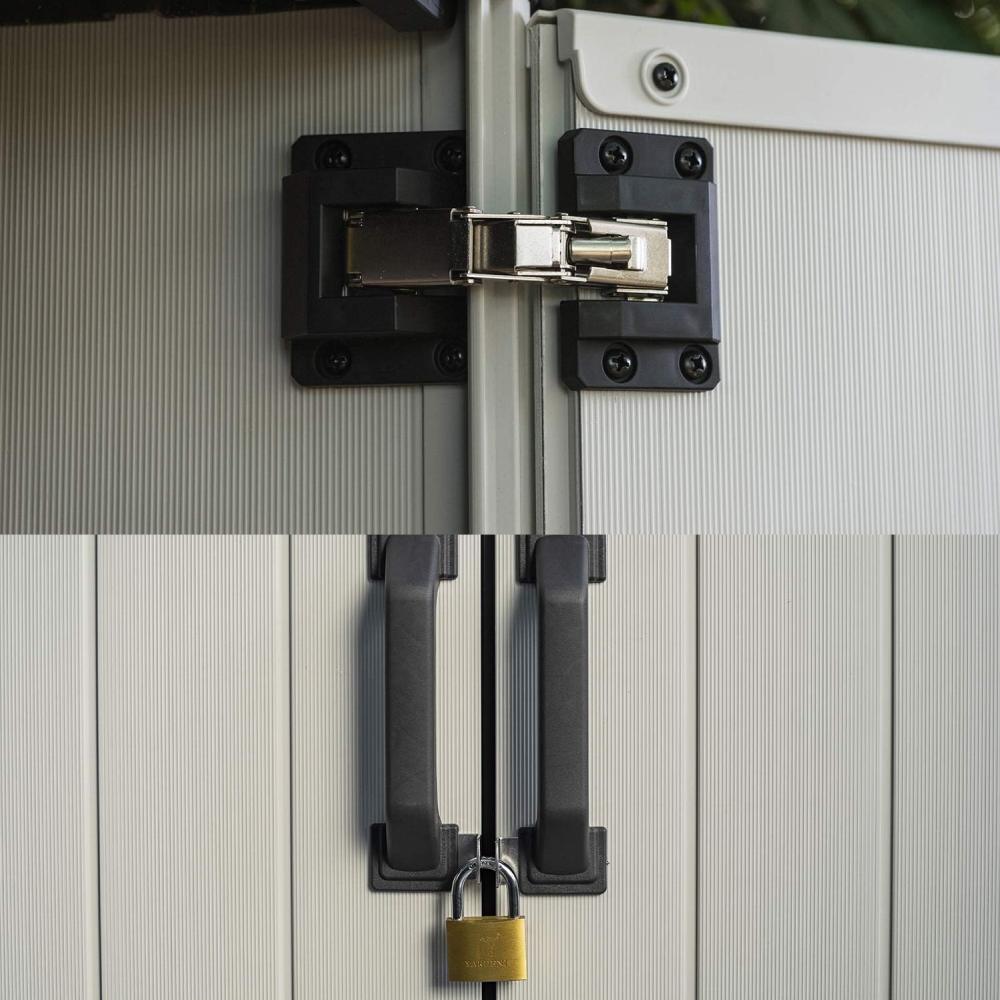
It is padlock compatible. The padlock is not included. The shed will take one, which is what makes it lockable, but you buy the lock.
Neither is a criticism of the shed. They are just the two things people expect to find in the carton and do not.
Damp, and why it appears in a waterproof store
People are sometimes surprised to find condensation inside a store that has kept every drop of rain out.
That is temperature, not leakage. A closed container in a garden warms through the day and cools sharply at night, and moisture in the air condenses on the coldest surface it can find.
It is not a problem for tools and a mower. It is a problem for cushions and fabric left sealed in all winter. Leave a little air space around soft items, and open the doors on a dry day now and then, and it stops mattering.