
The complete guide
Choosing between a floor stand, a wall hook and a vertical rack
Three ways to store a bike, and what each costs you
Bike storage comes down to what you are willing to give up: floor space, wall space, or the effort of lifting.
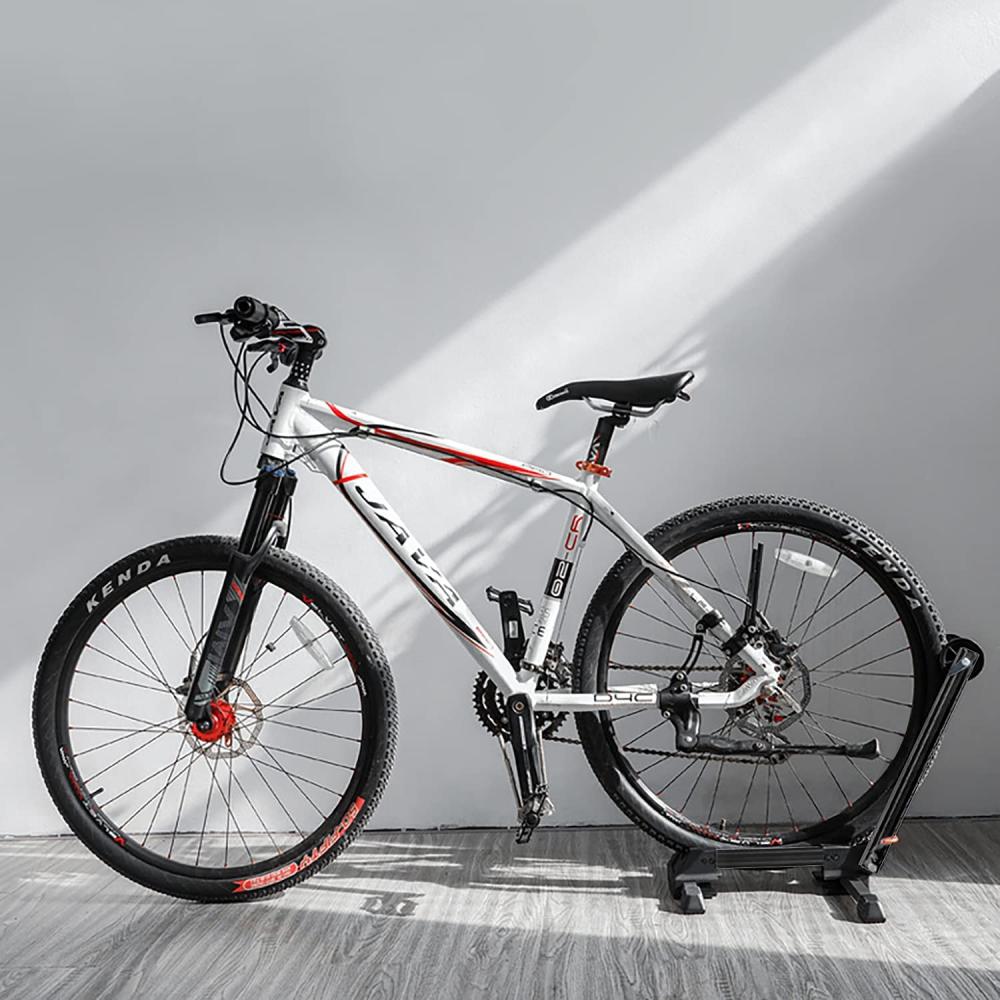
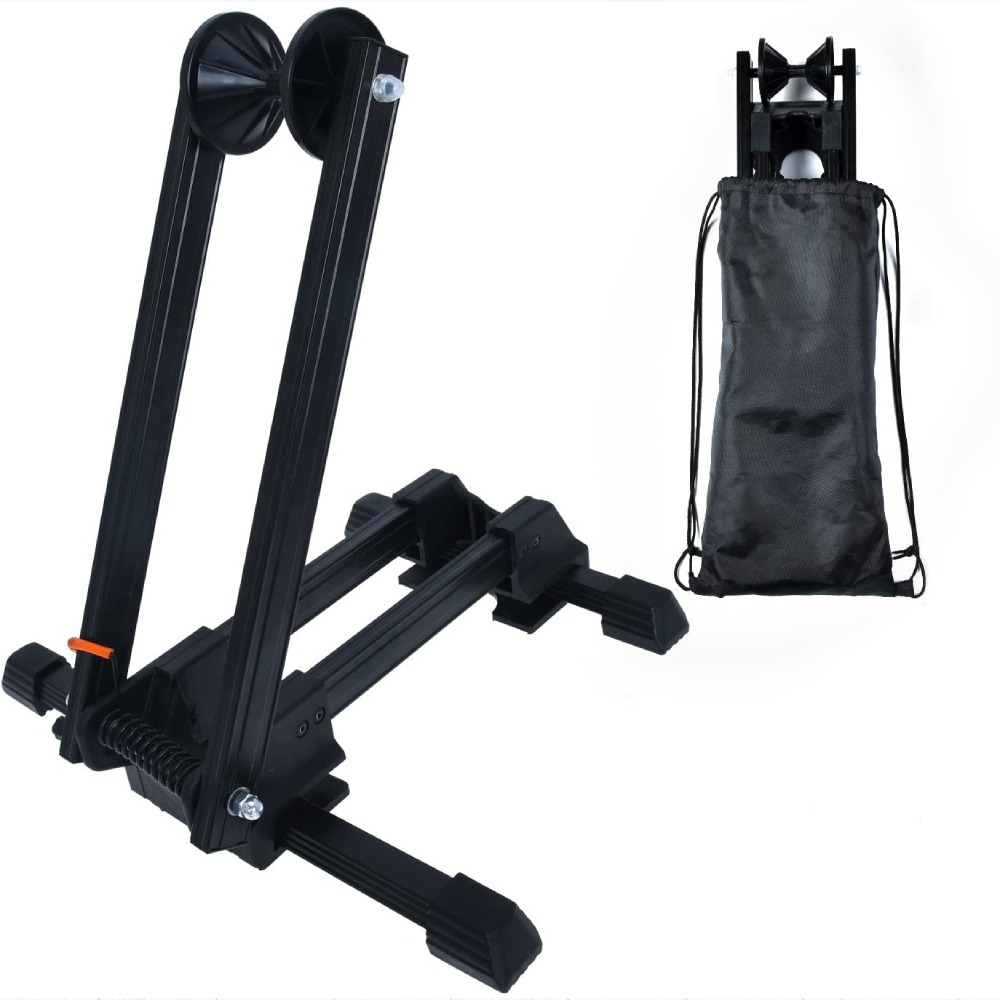
A floor stand costs floor space and nothing else. The bike stays at ground level, so parking it is a push rather than a lift, and nothing is fixed to the building. That makes it the only option in plenty of rented flats, and the obvious one for anyone who wheels a bike in and out daily.
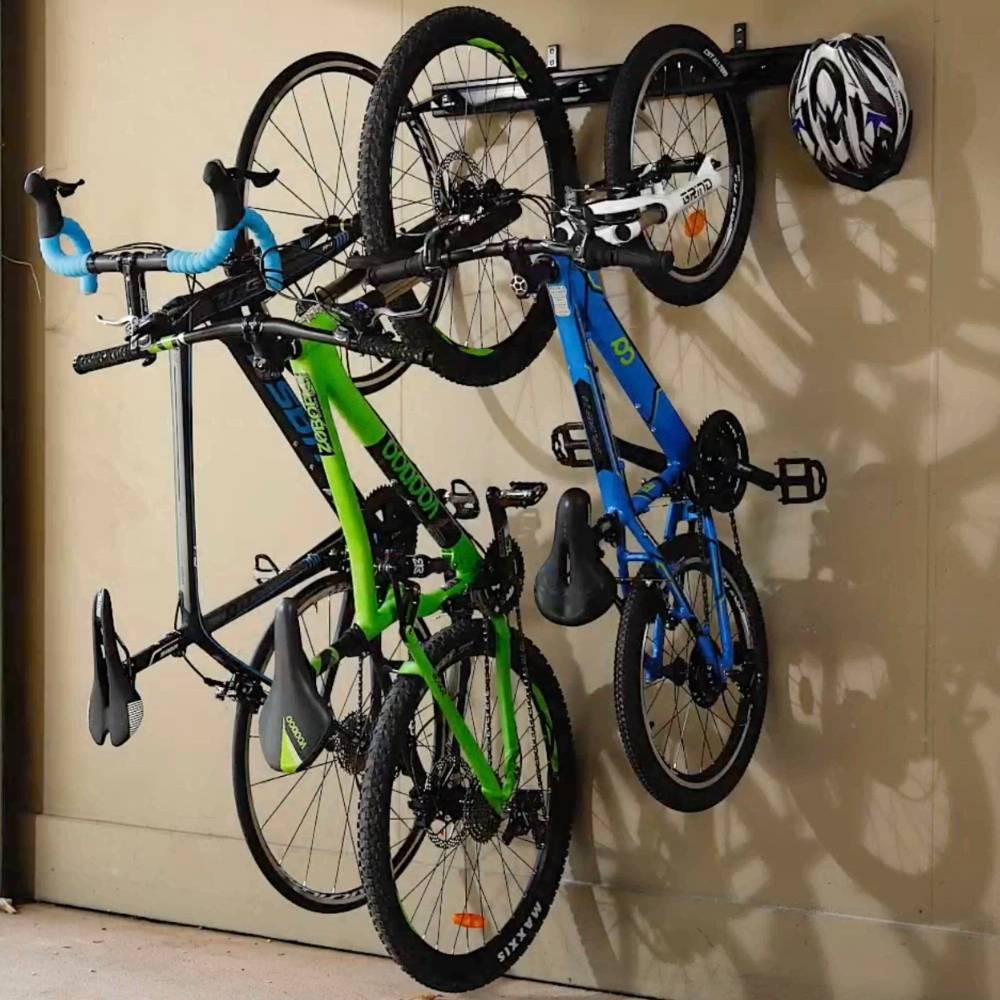
A wall hook costs wall space and effort. You have to lift the bike, which is fine for a road bike and much less fine for a loaded hybrid or an e-bike, and you have to drill into something solid.
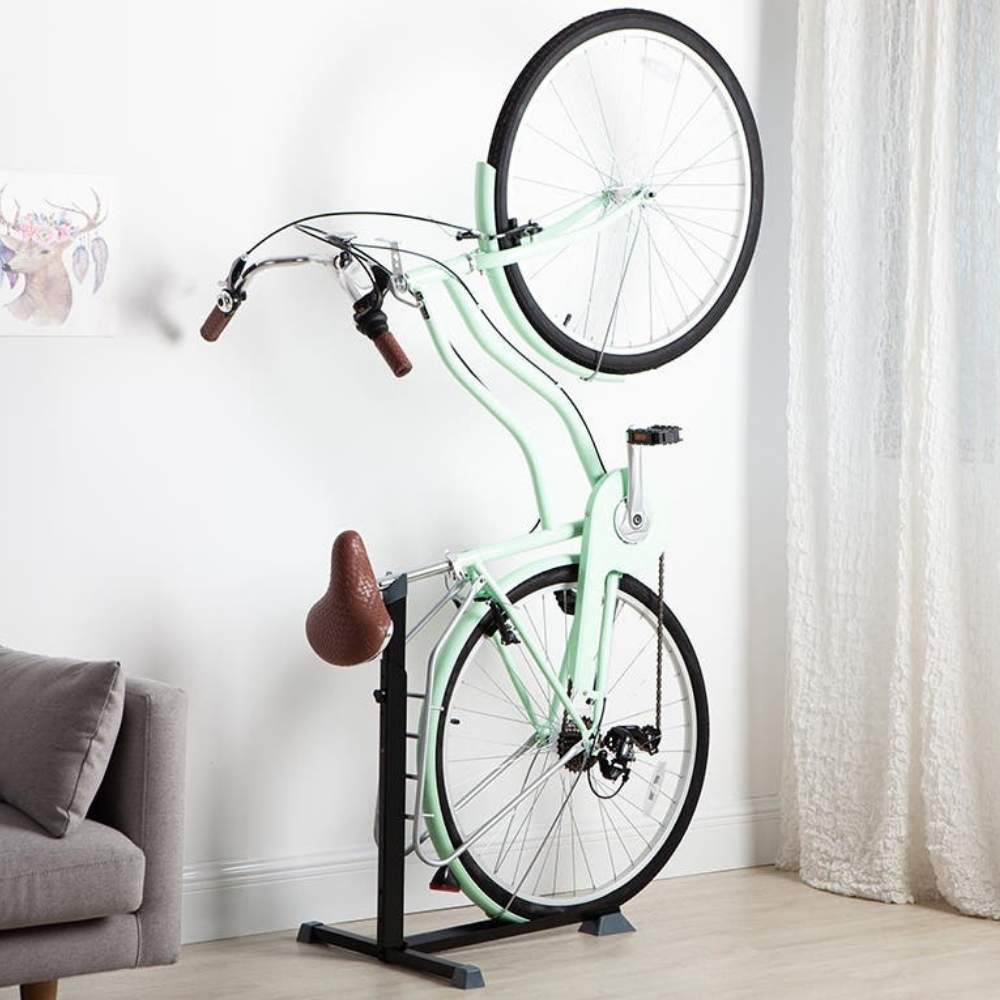
A vertical rack stands the bike on its rear wheel, saving a lot of floor space for a modest lift.
There is no best answer, only the one that matches your space and your bike's weight.
Why holding the tyre matters
Cheap stands hold a bike by clamping the rim or by pushing an arm between the spokes.
Both work and both are risks. A rim is a structural part of a wheel and a braking surface on many bikes, and repeated clamping marks it. Spokes are under tension and are not intended to take a side load from a stand.
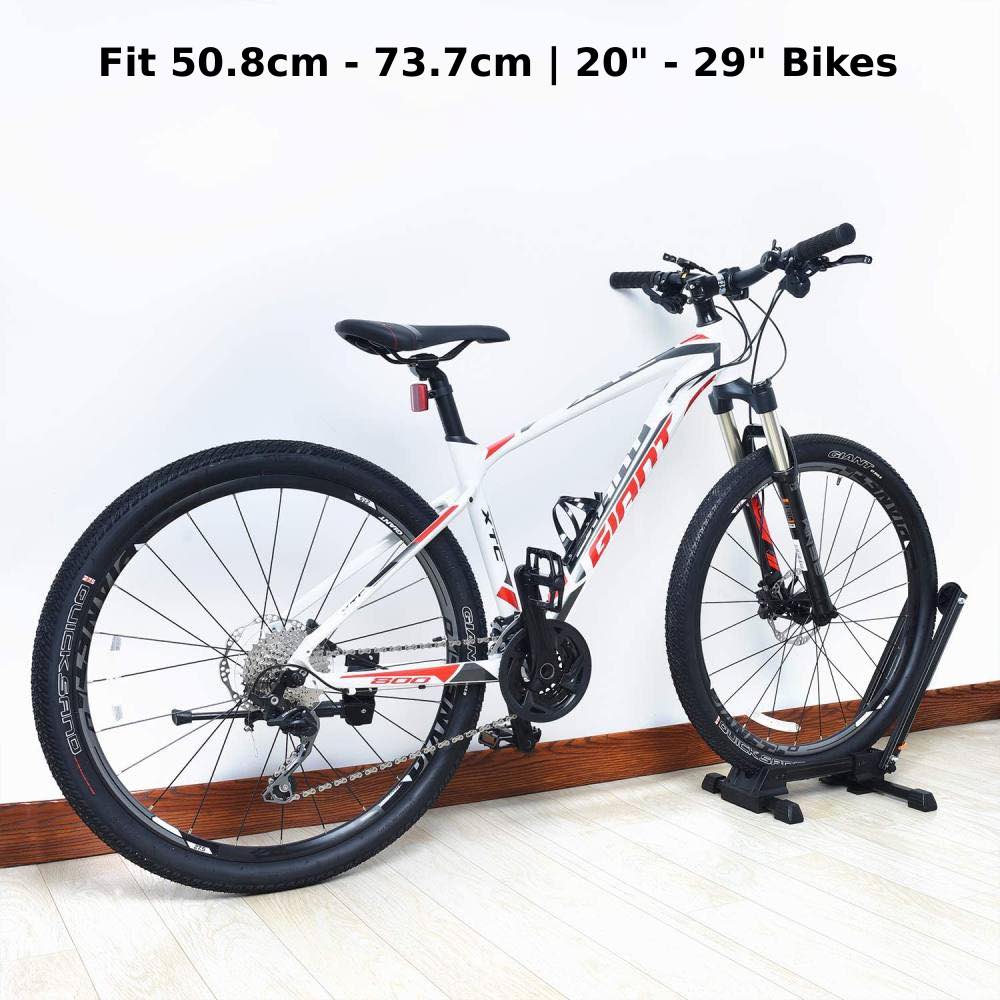
Closing on the tyre avoids the question entirely. The tyre is the part designed to be squeezed, it is the cheapest part to replace, and nothing about holding it affects how the wheel runs.
Depth is what stops the wobble
The difference between a stand that inspires confidence and one that does not is usually how deep the wheel sits.
A shallow channel holds the bike perched, and a knock at handlebar height is enough to lift the tyre out. A deeper channel means the wheel has to be lifted before it can escape, so a bump moves the bike rather than dropping it.
That is worth knowing when you compare stands on price, because the depth of the channel rarely appears in a specification and it is the thing you feel every day.
Front wheel or back wheel
The stand works with either, and which you choose changes how the bike behaves.
Front wheel in is the quicker park, because you push the bike forwards into it and walk away. The steering is held, so the bars cannot swing.
Rear wheel in puts the drivetrain side away from you if you park it against a wall, which is tidier if the chain is dirty and you are squeezing past it in a hallway.
Try both in the first week and one will suit your space obviously better than the other.
A stand is not a lock and not a shed
Worth saying plainly, because bike storage listings often blur it.
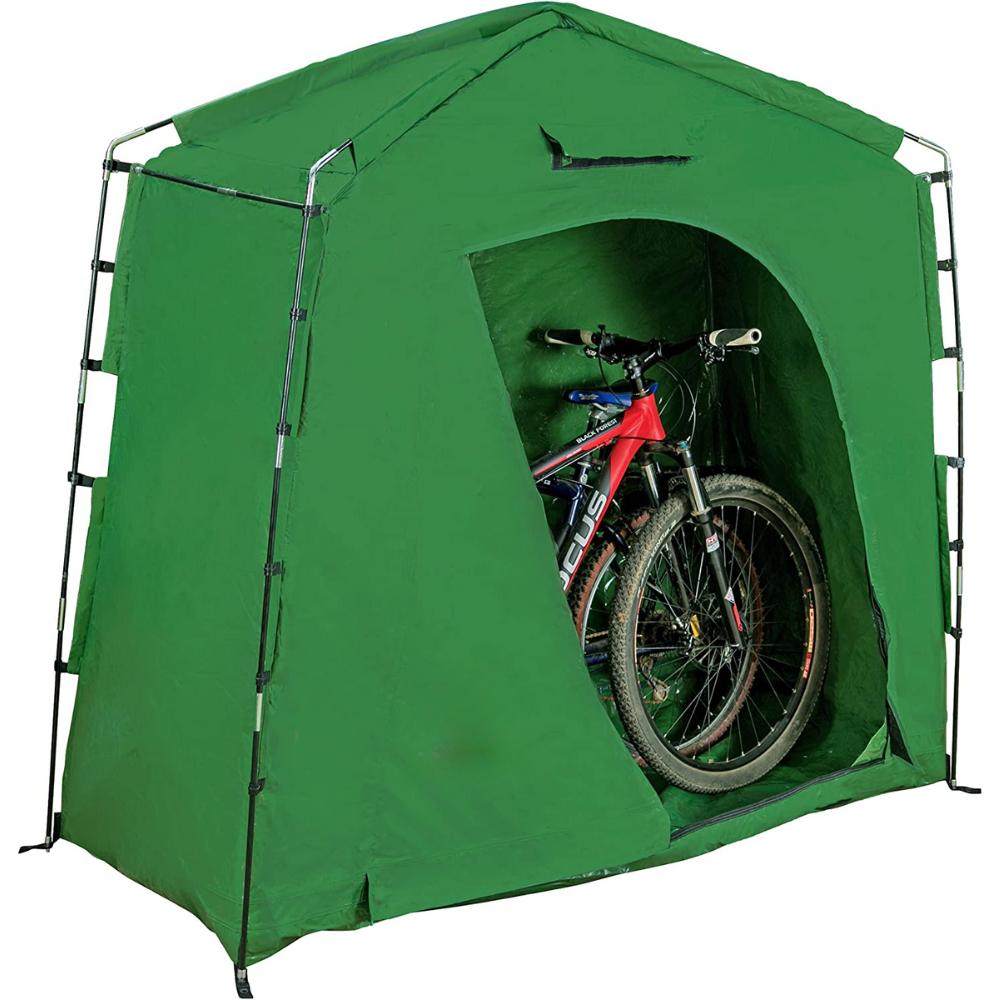
A stand holds a bike upright. It does not secure it, and it does not shelter it. A bike parked outdoors in a stand is exactly as exposed to weather and to theft as a bike leaning on a wall.
If the bike lives outside, the stand is the thing that stops it falling over, and a lock and a cover are separate purchases doing separate jobs.