

The complete guide
Getting long handled tools off the floor
Why leaning does not work
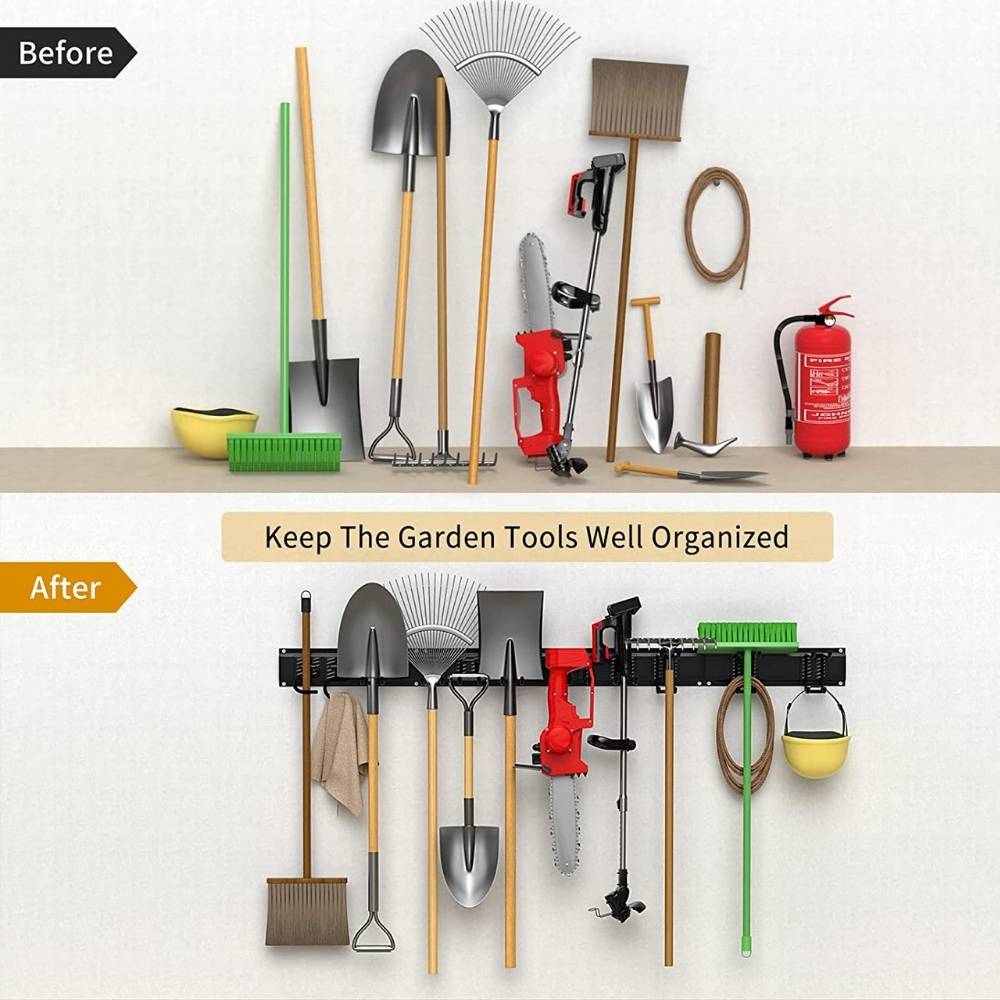
Every garage has the same corner: spade, fork, rake, broom and a strimmer, all leaning against the wall, all slowly sliding.
They slide because a tool leaning at an angle is held up by friction alone, and friction on a smooth garage floor is not much. One gets knocked, it takes two with it, and the whole group ends up across the floor or against the car.
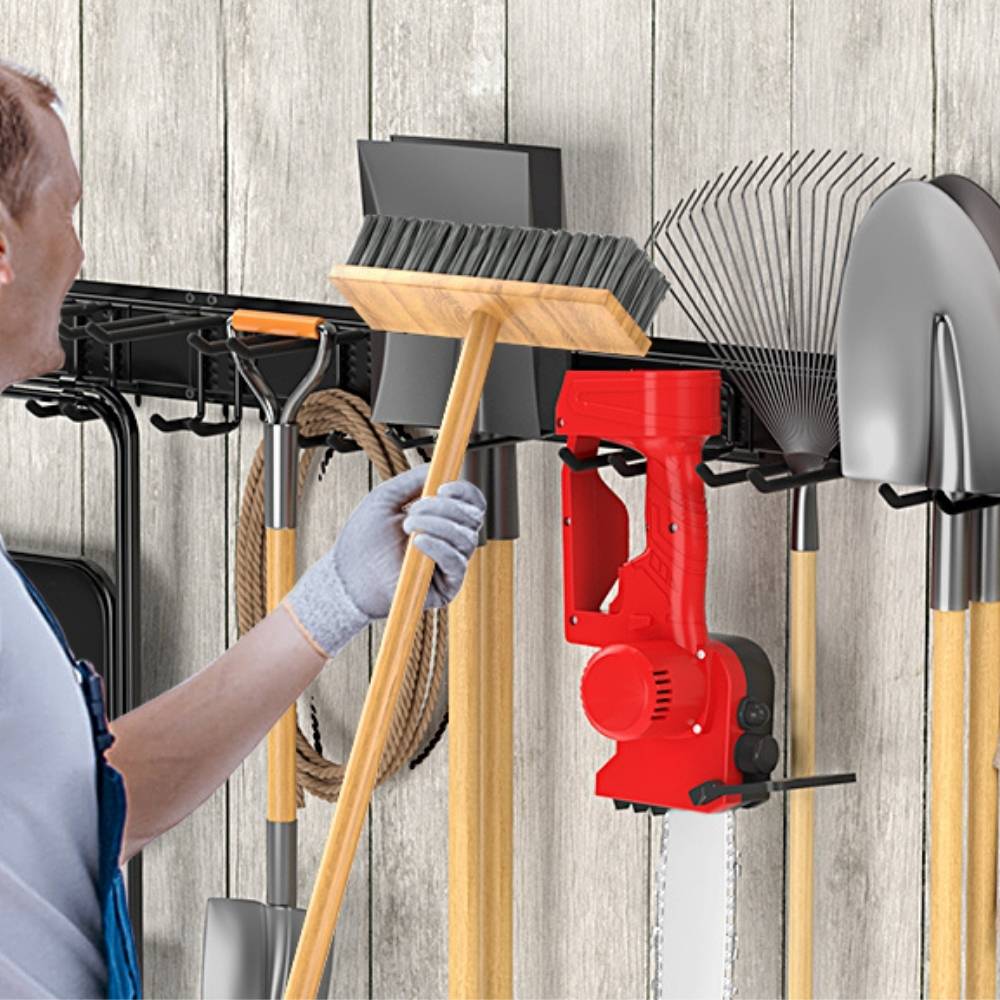
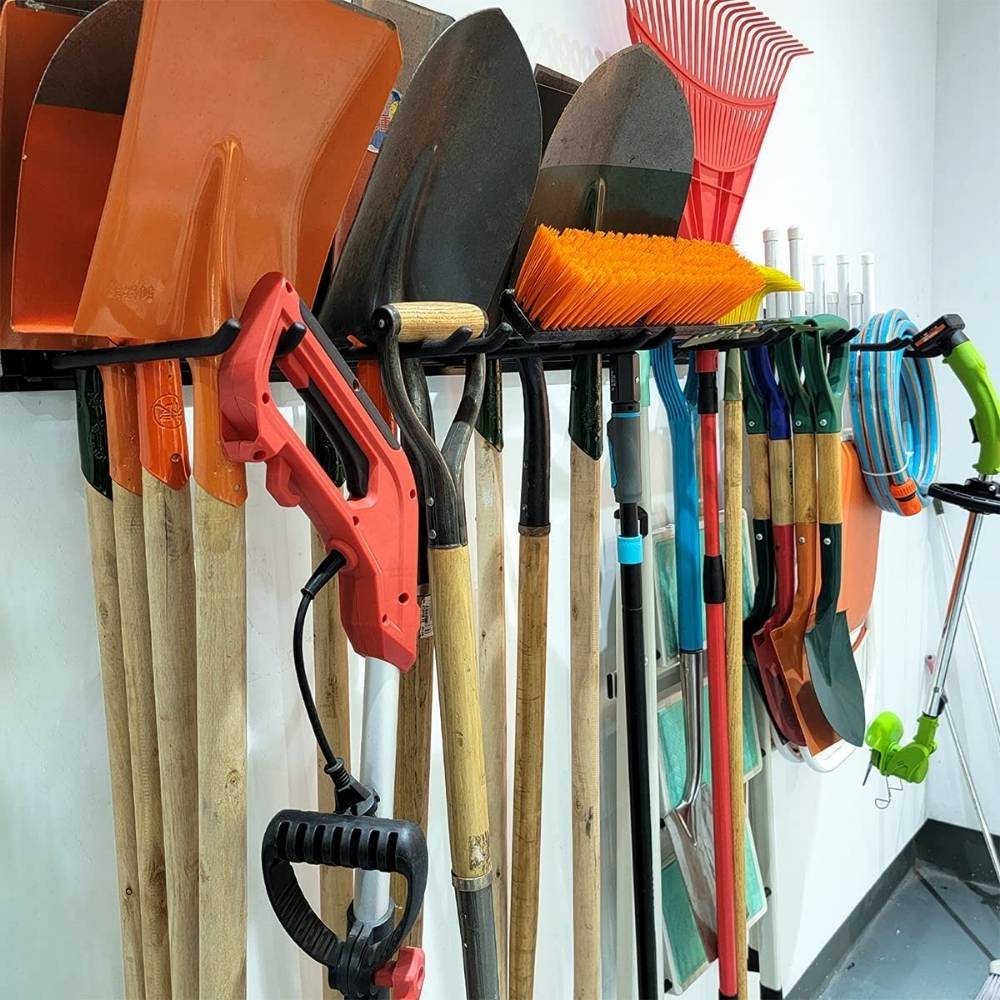
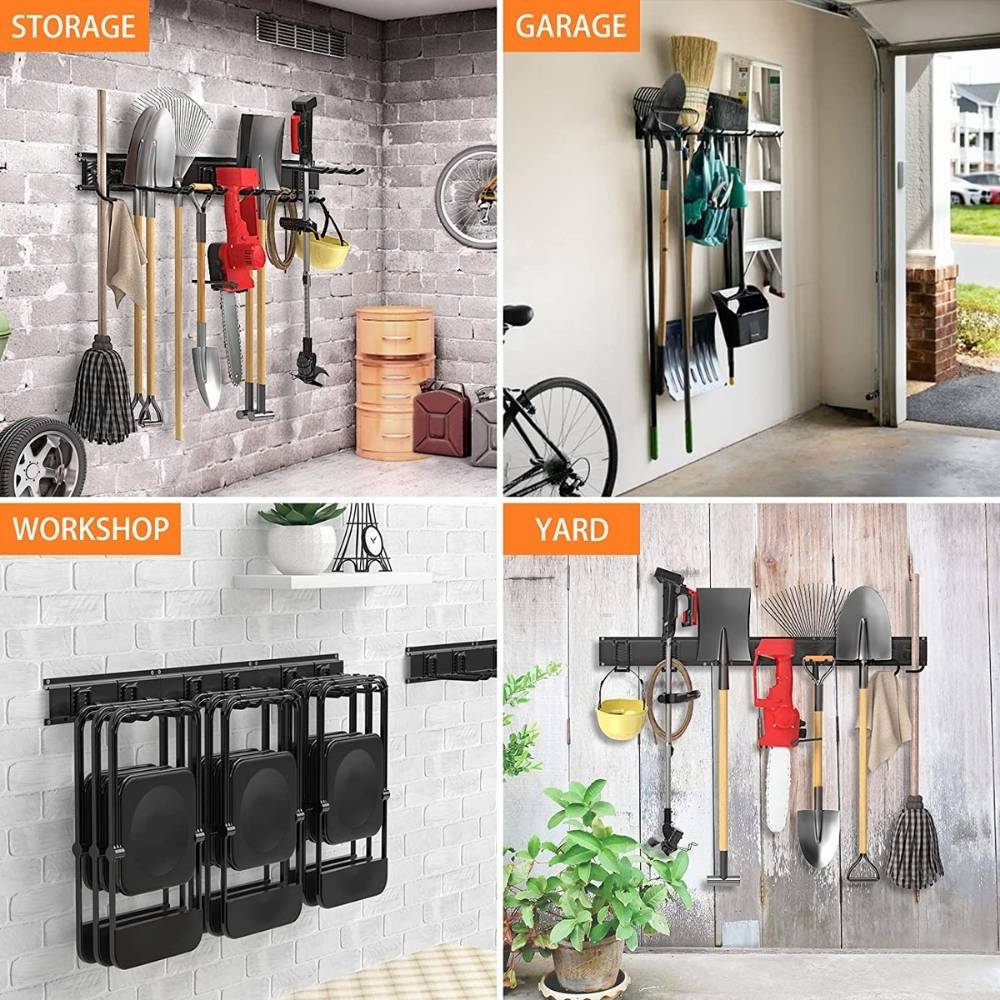
Hanging solves it completely, and it also gives back the floor space that the leaning pile was occupying.
A rail beats individual hooks
The obvious alternative is screwing separate hooks to the wall, and it works right up until anything changes.
Fixed hooks lock in the spacing you chose on day one. Buy a wider tool, inherit a leaf blower, decide the shears should live next to the secateurs, and you are drilling fresh holes and leaving old ones.
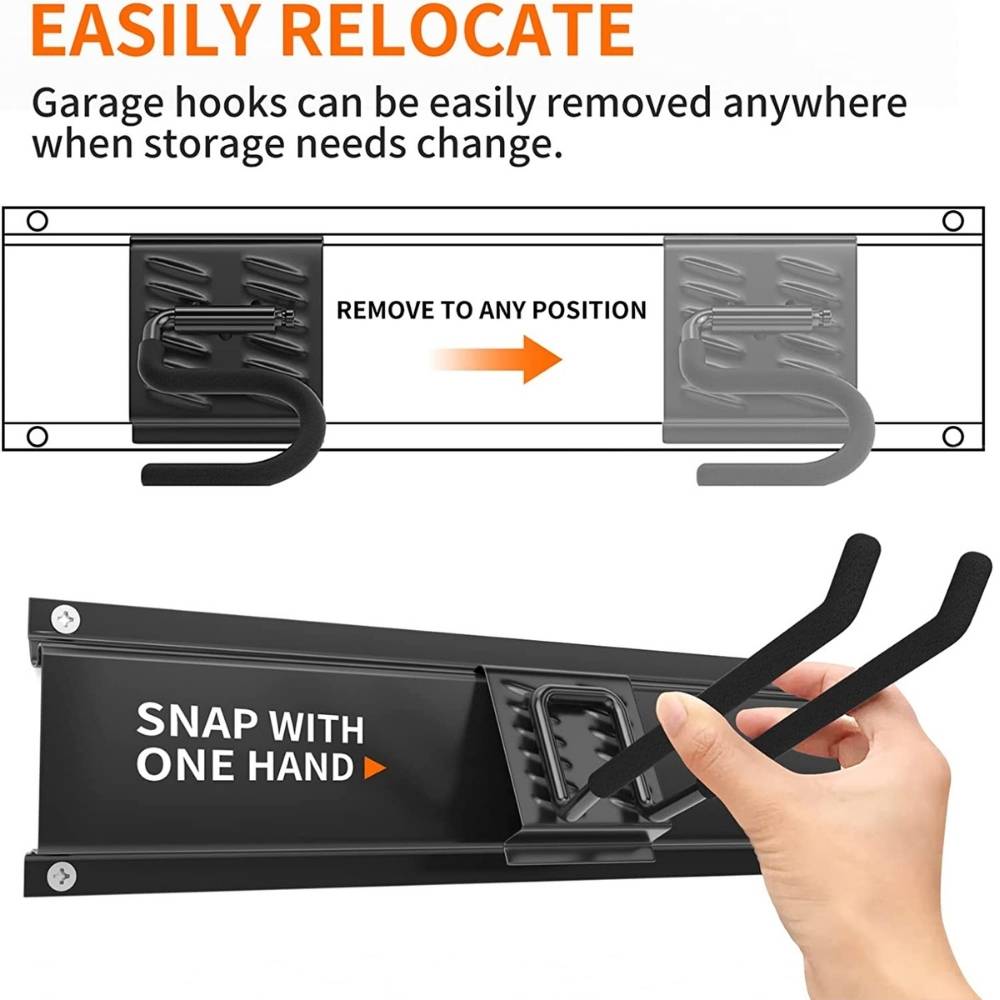
A rail with sliding hooks moves the decision to after the drilling. Get the rail level and secure, then arrange the hooks with the actual tools in your hands, which is the only way to get spacing right anyway. Change it in ten years' time in about a minute.
Mounting it: the part that matters
The rack is rated to 205 kg. That number is about the rack, and it means nothing if the wall or the fixings are the weak point.
Work out what your wall is before buying fixings. Solid brick or block takes proper masonry anchors. A timber stud wall needs the fixings to land in the studs, not the plasterboard between them. Plasterboard alone, with only cavity anchors, is not a sensible host for a heavily loaded tool rack.
Height is worth a moment. Hold your longest tool against the wall and mark where the rail needs to be for it to hang clear of the floor. Then check that your heaviest tool can be lifted onto a hook at that height without a struggle. Those two constraints usually settle it between them.
Get it level. A rail that slopes even slightly encourages everything to migrate to one end.
Loading it sensibly
Thirty kilos a hook is generous, and the practical limits are usually shape rather than weight.
Spread the heavy items along the rail instead of clustering them at one end. Hang the widest tools first and fill in around them, otherwise you end up with three narrow hand tools hogging the space the wheelbarrow needed.
Anything that hangs by a small loop rather than a shaft, like a bag or a coil of hose, sits better nearer the middle where it will not swing into a neighbour.
The two details that stop things falling
Both are easy to miss on the product page and both matter daily.
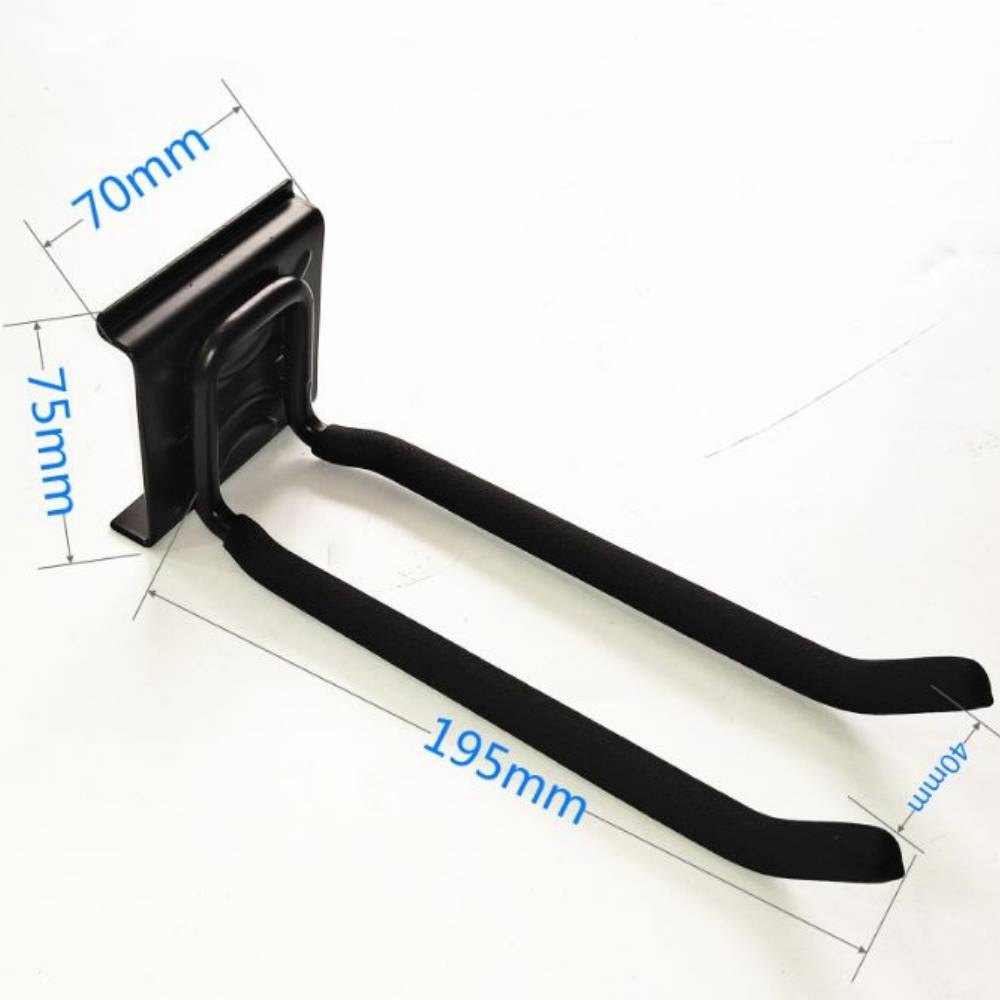
The upward angle at the tip. A hung tool rocks when it is knocked or when something is taken off next to it. On a straight hook that rocking walks the handle outwards until it drops. On an upturned tip it walks back towards the rail.
The rubber coating. Steel handles on steel hooks slip, especially with a bit of oil or dust on them. Rubber grips. It also keeps the hook from marking painted and wooden shafts, which is the slow damage nobody notices until the handle is scarred.